



- Focus and Scope
- Section Policies
- Peer Review Process
- Open Access Policy
- Archiving
- Authorship Criteria
- Manuscript Types
- Publication Frequency
- Archiving
- Copyright Notice
- Plagiarism Policy
- Allegation of Research Misconduct
- Conflict of Interest Policy
- Post-Publication Discussion
- Correction and Retraction Policy
- Peer Review Process
- Ownership and Management Information
- Author Fees
- Author Guidelines
Focus and Scope
Persepsi: Communication Journal is a media publication manuscript that contains the results of the Field Research communication science applying peer-reviewed. Manuscripts published in the Persepsi: Communication Journal includes the results of current original scientific research article reviews. Persepsi: Communication Journal accepts manuscripts in the field of research that covers scientific fields:
- Digital Journalism
- Media research and application
- Political Communication
- Public Relation
- Social Media
- Organizational Communication
- Cultural Communication
- Mass Media
- Broadcast
Section Policies
Articles
 Open Submissions |
Indexed |
Peer Reviewed |
Peer Review Process
Each accepted manuscript of Persepsi: Communication Journal will go through a review process by the Editor and reviewers, using a Double-blind Peer-Review Process in which the reviewer does not know the identity of the author, and the author does not know the identity of the reviewer.
Each manuscript received will be sent to Reviewers who registered in Persepsi: Communication Journal. The review process lasts a maximum of up to 30 (thirty) days with the allocation of time given to each reviewer to complete its review process being a maximum of ten (10) working days. If the previous peer-reviewer is not able to finish the review work within the time limit specified then Editor-in-Chief will appoint a surrogate reviewer to do a review manuscript.
In the review process, reviewers provide considerations relating to compatibility between the title, abstract, introduction, discussion (results), and conclusion. In addition, the reviewer also gives consideration associated with novelty, scientific impact, and references used
Review Process:
1. Author submit the manuscript
2. Editor Evaluation [some manuscripts are rejected or returned before the review process]
3. Double-blind peer review process
4. Editor Decision (Accepted Submission, Revisions Required, Resubmit For Review, Decline Submission)
5. Confirmation to the authors
The final decision of article acceptance will be made by Editors according to reviewers' comments. Publication of accepted articles including the sequence of published articles will be made by the Editor-in-Chief by considering the sequence of accepted dates and geographical distribution of authors.
EDITORIAL PROCESS

Open Access Policy
PERSEPSI: Communication Journal provides immediate open accessto all published content.
This journal follows the DOAJ definition of open access:
All articles are freely available online immediately upon publication.
Users are allowed to read, download, copy, distribute, print, search, or link to the full text of articles, crawl them for indexing, pass them as data to software, or use them for any other lawful purpose.
No registration or subscription is required to access articles.
By applying an open license, this journal ensures that research is freely available and reusable, supporting a greater global exchange of knowledge.
Archiving
This journal utilizes the LOCKSS system to create a distributed archiving system among participating libraries and permits those libraries to create permanent archives of the journal for purposes of preservation and restoration. More...
Authorship Criteria
Authorship Criteria
Persepsi: Communication Journal is committed to maintaining transparency, accountability, and integrity in authorship. Authorship should be granted only to individuals who have made significant intellectual or scholarly contributions to the preparation and completion of a manuscript.
To qualify as an author, each individual must meet the following criteria:
Substantial Contribution: The author has made a significant contribution to the conception or design of the study, the acquisition of data, or the analysis and interpretation of the research findings.
Manuscript Preparation: The author has participated in drafting the manuscript or critically revising it for important intellectual content.
Final Approval: The author has reviewed and approved the final version of the manuscript to be submitted or published.
Accountability: The author agrees to be accountable for the accuracy, integrity, and ethical conduct of the work and to help resolve any questions concerning its validity or integrity.
All individuals listed as authors must meet these criteria. Individuals who have contributed to the research but do not meet the authorship criteria should be acknowledged appropriately in the Acknowledgments section, with their permission.
Corresponding Author
The corresponding author is responsible for communicating with the journal throughout the submission, review, revision, and publication processes. The corresponding author must ensure that:
All listed authors have approved the manuscript and agreed to its submission to Persepsi: Communication Journal
The author order and author information are accurate and have been approved by all co-authors.
All relevant research data, ethical approvals, funding information, and potential conflicts of interest are disclosed where applicable.
All co-authors are informed of editorial decisions, reviewer comments, and requests for revision.
Any necessary corrections or clarifications are communicated to the journal promptly.
Author Contributions
Authors are encouraged to describe their individual contributions to the manuscript clearly. Where appropriate, the journal recommends using the Contributor Roles Taxonomy (CRediT) to identify contributions such as conceptualization, methodology, investigation, data curation, formal analysis, writing—original draft, writing—review and editing, supervision, and project administration.
Changes in Authorship
Any request to add, remove, or rearrange authors after manuscript submission must be justified in writing and approved by all authors, including any author being added or removed. The request must be submitted to the editor for consideration. Changes to authorship after publication will be handled in accordance with the journal's publication ethics policies.
Guest, Gift, and Ghost Authorship
Persepsi: Communication Journal does not permit guest authorship, gift authorship, or ghost authorship.
Guest or Gift Authorship: Listing individuals who have not made sufficient scholarly contributions to qualify for authorship is not permitted.
Ghost Authorship: Excluding individuals who have made substantial contributions to the research or manuscript without appropriate acknowledgment is not permitted.
The journal may request clarification regarding authorship and contributions when necessary. Suspected violations will be handled in accordance with the journal's publication ethics policies.
Use of Artificial Intelligence
Artificial intelligence (AI) tools cannot be listed as authors because they cannot assume responsibility or accountability for scholarly work. Authors who use AI tools in preparing a manuscript must disclose their use in accordance with the journal's AI policy. Human authors remain fully responsible for the accuracy, originality, integrity, and ethical compliance of the submitted work.
By submitting a manuscript to Persepsi: Communication Journal, all authors confirm that the authorship information is accurate, that all listed authors meet the stated criteria, and that the manuscript has been approved by all authors.
Manuscript Types
Manuscript Types
Persepsi: Communication Journal accepts original scholarly manuscripts that contribute to the advancement of communication through empirical research, literature-based inquiry, and conceptual analysis. All submitted manuscripts must be original, relevant to the journal's focus and scope, and prepared in accordance with the journal's Author Guidelines.
The journal accepts the following types of manuscripts:
Original Research Articles
Articles reporting the findings of original empirical research in communication . These manuscripts may employ qualitative, quantitative, or mixed-methods approaches and should present a clear research problem, appropriate methodology, analysis of findings, and a discussion of their implications for communication .
Literature Review Articles
Articles that critically examine, synthesize, and evaluate existing scholarly literature on a specific topic related tocommunication. Reviews should provide a clear search or selection approach where applicable, identify research trends or gaps, and offer meaningful insights for future research.
Conceptual Articles
Manuscripts presenting theoretical arguments, conceptual frameworks, critical analyses, or scholarly ideas related to . These articles should demonstrate a strong theoretical foundation, logical argumentation, and a clear contribution to the development of communication thought and practice.
Historical and Intellectual Studies
Articles examining the history of communication , the development of communication institutions, or the educational ideas and contributions of classical and contemporary Muslim scholars. Manuscripts should be based on appropriate historical sources and demonstrate critical analysis.
Comparative Studies in communication
Articles comparing educational philosophies, curricula, policies, institutions, teaching practices, or approaches to communication across different regions, periods, or educational contexts. Comparative studies should use clear analytical criteria and provide meaningful conclusions.
Research and Development Articles
Articles reporting the systematic design, development, implementation, and evaluation of educational models, curricula, instructional media, learning resources, or other innovations relevant to communication . Manuscripts should explain the development procedures and provide appropriate evidence of evaluation or effectiveness.
General Requirements
All manuscript types must:
Fall within the focus and scope Persepsi: Communication Journal
Present original, academically sound, and clearly articulated contributions.
Use appropriate methods of inquiry and reliable scholarly references.
Follow the journal's formatting, citation, and reference requirements.
Comply with publication ethics, research integrity, and authorship policies.
Not be under consideration for publication by another journal or have been previously published in substantially the same form.
All submissions are subject to editorial screening and peer review. Submission does not guarantee acceptance, and publication decisions are based on the manuscript's originality, academic quality, methodological rigor, relevance, and contribution to the field of Communication
Publication Frequency
Publication Schedule
Persepsi: Communication Journal is published twice a year, with two issues published annually:
Issue 1: May
Issue 2: November
The journal publishes peer-reviewed scholarly articles in the fields of communication and related areas in accordance with its focus and scope.
Manuscripts are accepted throughout the year. All submissions undergo an initial editorial screening and, if considered suitable, a peer-review process. Accepted manuscripts are scheduled for publication based on the editorial decision, completion of the publication process, and the journal's publication schedule.
The journal is committed to maintaining a consistent publication schedule and ensuring the quality, integrity, and timely dissemination of published scholarly work.
Archiving
Electronic Archiving Policy
Persepsi: Communication Journal is committed to ensuring the long-term preservation, security, and accessibility of its published scholarly content. The journal recognizes the importance of digital archiving in preserving the scholarly record and maintaining continued access to published articles.
The journal supports electronic archiving and digital preservation through the following measures:
Digital Archiving: Published articles and their associated metadata are stored electronically through the journal's Open Journal Systems (OJS) platform to support long-term access and retrieval.
Digital Preservation: The journal encourages the preservation of published content through reliable digital archiving systems and institutional repositories, where available.
LOCKSS and CLOCKSS: Where supported and activated, the journal may use the Lots of Copies Keep Stuff Safe (LOCKSS) and Controlled Lots of Copies Keep Stuff Safe (CLOCKSS) systems to support distributed preservation and continued access to its published content.
Repository and Author Archiving: Authors may deposit the published version of their articles in institutional or other appropriate scholarly repositories, subject to the journal's copyright and licensing policies.
Access and Retrieval: Published articles remain accessible through the journal's official website for reading, downloading, and scholarly reference, subject to the continued availability of the platform.
Preservation of the Scholarly Record: The journal aims to maintain the integrity and completeness of its published content and to minimize the risk of permanent loss due to technical failures or changes in digital infrastructure.
The journal periodically reviews its electronic archiving practices to improve the preservation and accessibility of published scholarly work.
This policy reflects the journal's commitment to responsible digital preservation. Specific preservation services, including LOCKSS or CLOCKSS, are considered active only when the journal has confirmed participation and implementation.
Copyright Notice
Copyright and License
Copyright
Authors who publish in Persepsi: Communication Journal retain the copyright of their work. By publishing their articles in the journal, authors grant the journal the right of first publication.
Authors are responsible for ensuring that their manuscripts are original, do not infringe upon the copyright or other rights of third parties, and have obtained permission to use copyrighted material where required.
Authors may share and distribute their published articles in institutional repositories, personal websites, and other scholarly platforms, provided that the original publication in Persepsi: Communication Journal is properly acknowledged and the applicable license terms are followed.
License
Persepsi: Communication Journal is an open-access journal licensed under the Creative Commons Attribution-ShareAlike 4.0 International License (CC BY-SA 4.0).
Under this license, users are permitted to:
Share: Copy and redistribute the material in any medium or format.
Adapt: Remix, transform, and build upon the material for any purpose, including commercial purposes.
These permissions are subject to the following conditions:
Attribution: Users must give appropriate credit to the original author(s), provide a link to the license, and indicate whether changes have been made.
ShareAlike: If users remix, transform, or build upon the material, they must distribute their contributions under the same license as the original.
No Additional Restrictions: Users may not apply legal terms or technological measures that legally restrict others from exercising the rights granted by the license.
The full terms of the license are available at: Creative Commons Attribution-ShareAlike 4.0 International (CC BY-SA 4.0).
Open Access Policy
All articles published in Persepsi: Communication Journal are freely accessible to readers without subscription or access fees. Readers may read, download, copy, distribute, print, search, link to, and reuse published articles in accordance with the terms of the CC BY-SA 4.0 license.
Through this policy, the journal supports the broad dissemination of scholarly knowledge while ensuring proper attribution to authors and encouraging the sharing of derivative works under the same license.
Plagiarism Policy
Plagiarism Policy
Persepsi: Communication Journal considers plagiarism unacceptable and is committed to maintaining academic integrity and ethical standards in scholarly publishing. All submitted manuscripts must be original, properly cited, and free from plagiarism, including self-plagiarism.
The journal uses Turnitin plagiarism detection software to assist in identifying textual similarities and potential cases of plagiarism. The Editorial Board evaluates the similarity report and examines the context, extent, and nature of the similarities before determining the appropriate action. Editorial decisions are not based solely on the similarity percentage.
Definition of Plagiarism
Plagiarism is the act of copying another person's text, ideas, data, or other intellectual contributions and presenting them as one's own work without appropriate acknowledgment. Authors must clearly distinguish quoted or borrowed material from their own writing and properly cite the original sources.
Plagiarism is a form of academic misconduct that may have serious consequences, including rejection or retraction of an article, damage to academic reputation, and other sanctions in accordance with applicable institutional policies.
This definition applies to copied text, ideas, data, and other intellectual contributions, regardless of:
The source from which the text, idea, or material was obtained.
Whether the original author copied the material from another source.
Whether the identity of the original author is known.
The type of work in which the material is reproduced, including journal articles, books, book chapters, websites, conference papers, academic assignments, and other scholarly works.
Whether permission has been granted to reproduce the material. Permission to reproduce content does not eliminate the obligation to acknowledge the original source.
Whether the copied material was originally authored by the submitting author. Reusing one's previously published text, data, or findings without appropriate citation or disclosure may constitute self-plagiarism or redundant publication.
Plagiarism Screening and Editorial Assessment
All submitted manuscripts are subject to plagiarism screening using Turnitin. If potential plagiarism is identified, the Editorial Board will assess the similarity report and determine the appropriate response based on the seriousness of the violation, the amount and significance of the material involved, the presence or absence of proper citation, and whether the case involves data, findings, ideas, or methods.
The journal applies the following categories and sanctions:
1. Minor Plagiarism
Minor plagiarism involves a limited portion of text, such as a short sentence or paragraph, reproduced without adequate citation, where no significant data, research findings, or original ideas have been appropriated.
Sanction: The author will receive a written warning and be required to revise the manuscript and provide appropriate citations and acknowledgments. The revised manuscript may be reassessed by the editor before the review or publication process continues.
2. Intermediate Plagiarism
Intermediate plagiarism involves the substantial reproduction of a paragraph, sentence, data, or other material from another work without proper acknowledgment, particularly where the copied material contributes significantly to the manuscript's argument or content.
Sanction: The submitted manuscript will be rejected. The Editorial Board may take further action where the circumstances warrant it.
3. Severe Plagiarism
Severe plagiarism involves the extensive or systematic appropriation of another work, including the reproduction of substantial portions of published research, original results, data, formulas, equations, statements, ideas, or research methods without proper acknowledgment.
Sanction: The manuscript will be rejected. The authors may also be prohibited from submitting further manuscripts to the journal. Any additional action will be determined by the Editorial Board in accordance with the seriousness of the case and applicable publication ethics standards.
Retraction Policy
Articles published in Persepsi: Communication Journal may be retracted when there is clear evidence that the integrity or reliability of the published work has been seriously compromised. Grounds for retraction include, but are not limited to, the following:
There is clear evidence that the findings are unreliable because of research misconduct, such as data fabrication or falsification, or because of a significant honest error, such as a miscalculation or experimental error.
The findings have previously been published elsewhere without appropriate cross-referencing, permission where required, or adequate justification, resulting in redundant or duplicate publication.
The article contains plagiarism.
The article reports research conducted in violation of applicable ethical standards.
Retraction decisions are made following an editorial assessment of the evidence and the circumstances of the case. Where appropriate, the journal will provide a retraction notice that clearly identifies the affected article and explains the reason for the retraction. The original publication record will be handled transparently to preserve the integrity of the scholarly record.
The journal follows the Committee on Publication Ethics (COPE) Retraction Guidelines when considering and implementing retractions. The guidelines are available at:
https://publicationethics.org/files/retraction%20guidelines.pdf
Commitment to Publication Ethics
Persepsi: Communication Journal expects all authors to uphold honesty, originality, transparency, and proper acknowledgment of sources throughout the research and publication process. Authors are responsible for ensuring that their submissions comply with this policy. The Editorial Board reserves the right to reject manuscripts, request revisions, retract published articles, or impose other appropriate measures when violations are identified.
Allegation of Research Misconduct
Allegation of Research Misconduct
Persepsi: Communication Journal is committed to maintaining the highest standards of research integrity, academic honesty, and publication ethics. The journal takes allegations of research misconduct seriously and is committed to handling all concerns fairly, confidentially, objectively, and promptly.
Research misconduct may include, but is not limited to, fabrication, falsification, plagiarism, inappropriate manipulation of research data or images, unethical research practices, duplicate publication, undisclosed conflicts of interest, and other violations of accepted scholarly standards.
Reporting Alleged Misconduct
Any individual who suspects research misconduct in a manuscript submitted to or an article published by Persepsi: Communication Journal may report the concern to the editorial team. Reports should include sufficient information and supporting evidence to enable an initial assessment.
The journal encourages allegations to be submitted in good faith. The identity of the person raising a concern will be treated confidentially to the extent possible, subject to the requirements of a fair investigation.
Preliminary Assessment
Upon receiving an allegation, the Editor-in-Chief or an authorized editor will conduct a preliminary assessment to determine whether the concern falls within the journal's responsibility and whether sufficient information is available to proceed.
Where necessary, the editor may request additional documentation, consult relevant editorial experts, or use appropriate tools to assess the allegation. The journal will avoid making premature conclusions before the available evidence has been evaluated.
Investigation Procedure
If the allegation warrants further examination, the journal may:
Review the manuscript, published article, research data, supplementary materials, and relevant correspondence.
Request a written explanation or supporting documentation from the authors concerned.
Consult peer reviewers, editorial board members, research ethics specialists, or other independent experts where appropriate.
Contact the authors' affiliated institutions, research funders, or relevant authorities when necessary and justified.
Assess the evidence objectively and document the steps taken and the resulting decision.
All parties involved will be given a reasonable opportunity to provide relevant information before a decision is made, where appropriate.
Possible Outcomes
Depending on the seriousness of the allegation and the evidence available, the journal may take one or more of the following actions:
Dismiss the allegation if it is unsupported by sufficient evidence.
Request clarification, correction, or additional documentation.
Require revisions to address identified problems before publication.
Reject the manuscript if serious misconduct is established or the concerns cannot be resolved satisfactorily.
Publish a correction, expression of concern, or retraction for an article already published, where warranted.
Notify the authors' affiliated institutions, research funders, or other relevant bodies when appropriate.
The journal will make decisions based on the evidence, the nature of the alleged misconduct, and applicable publication ethics principles.
Confidentiality and Protection Against Retaliation
The journal will handle allegations and related information confidentially to the extent possible. Information will be shared only with individuals or institutions whose involvement is necessary for an appropriate assessment or investigation.
The journal does not tolerate intimidation or retaliation against individuals who raise concerns in good faith. Deliberately false or malicious allegations may be addressed through appropriate procedures.
Cooperation with Institutions
Where an allegation requires investigation beyond the journal's authority, the editorial team may refer the matter to the relevant institution or organization. The journal may rely on findings from a competent institutional investigation while retaining responsibility for decisions concerning editorial actions and the integrity of its published record.
Commitment to Research Integrity
Persepsi: Communication Journal seeks to protect the reliability of the scholarly record and uphold responsible research practices. All allegations of research misconduct will be assessed carefully and handled in accordance with the journal's publication ethics policies and recognized principles of publication ethics, including guidance from the Committee on Publication Ethics (COPE), where applicable.
Conflict of Interest Policy
Conflict of Interest Policy
Persepsi: Communication Journal is committed to maintaining transparency, objectivity, and integrity throughout the scholarly publishing process. The journal requires authors, editors, and reviewers to disclose any financial, professional, personal, or other relationships that could influence, or reasonably be perceived to influence, their judgment or decisions concerning a manuscript.
Definition of Conflict of Interest
A conflict of interest occurs when an individual's personal, financial, professional, academic, or institutional interests may compromise, or appear to compromise, their impartiality in conducting research, evaluating a manuscript, or making editorial decisions.
Conflicts of interest may include, but are not limited to:
Financial Interests: Employment, consultancies, honoraria, research funding, grants, stock ownership, or other financial relationships relevant to the submitted work.
Professional or Institutional Relationships: Employment at the same institution, close professional collaboration, supervisory relationships, or other affiliations that may affect impartial judgment.
Personal Relationships: Family ties, close friendships, personal disputes, or other relationships that could influence professional decisions.
Academic Competition: Professional rivalry, competing research interests, or other circumstances that may affect the objective assessment of a manuscript.
Intellectual or Ideological Interests: Strong commitments or positions that could reasonably be perceived as influencing the interpretation or evaluation of research findings.
The existence of a conflict of interest does not necessarily indicate misconduct. However, failure to disclose a relevant conflict may undermine the credibility and integrity of the publication process.
Responsibilities of Authors
All authors submitting manuscripts to Persepsi: Communication Journal must disclose any actual, potential, or perceived conflicts of interest that may be relevant to their research.
Authors are required to:
Declare relevant financial and non-financial interests during manuscript submission.
Disclose funding sources and the role of funders in the research design, data collection, analysis, interpretation, manuscript preparation, and publication decision, where applicable.
Include a conflict of interest statement in the manuscript.
State explicitly if no competing interests exist.
If no conflict of interest exists, authors may use the following declaration:
“The authors declare that they have no conflict of interest related to the publication of this article.”
Responsibilities of Editors
Editors must disclose any conflicts of interest that could affect their editorial judgment. An editor who has a conflict involving a submitted manuscript must withdraw from handling it and ensure that an independent editor is assigned.
Editors must not use unpublished information from submitted manuscripts for personal advantage or allow personal, professional, or institutional relationships to influence editorial decisions.
Responsibilities of Reviewers
Reviewers must disclose any conflicts of interest that may affect their ability to provide an impartial assessment. Reviewers should decline an invitation when a conflict cannot be appropriately managed.
Reviewers must maintain the confidentiality of manuscripts and must not use unpublished data, ideas, or findings for personal or professional benefit.
Funding Disclosure
Authors must acknowledge all sources of financial support relevant to their research. Where applicable, the manuscript should explain the role of the funding organization in the research process and the preparation or submission of the article.
If the funder had no involvement in these activities, authors are encouraged to state this explicitly.
Management of Conflicts of Interest
When a conflict of interest is disclosed or identified, Persepsi: Communication Journal will assess the circumstances and take appropriate measures to protect the integrity of the editorial and peer-review process. These measures may include assigning an independent editor or reviewer, requesting additional disclosures, or taking other actions deemed necessary.
Failure to disclose a significant conflict of interest may result in rejection of a manuscript or, in cases involving a published article, the publication of a correction, expression of concern, or retraction, depending on the circumstances.
Commitment to Transparency
Persepsi: Communication Journal is committed to ensuring that conflicts of interest are handled transparently, fairly, and consistently. Disclosure enables readers to evaluate research findings in an informed manner and supports trust in the journal's editorial decisions and published scholarship.
Post-Publication Discussion
Post-Publication Discussion
Persepsi: Communication Journal welcomes scholarly discussion, feedback, and constructive criticism regarding articles that have been published in the journal. Readers may submit comments, questions, or concerns about the accuracy, originality, methodology, and ethical aspects of published articles to the Editorial Board.
The Editorial Board will evaluate all submissions fairly and objectively. Authors of the articles concerned may be invited to respond. If a post-publication discussion reveals potential errors, plagiarism, research misconduct, or other ethical concerns, the journal will investigate the matter and take appropriate action in accordance with its publication ethics policies and the guidelines of the Committee on Publication Ethics (COPE).
The journal is committed to promoting transparent academic dialogue, maintaining the integrity of the scholarly record, and ensuring that post-publication concerns are handled responsibly.
Correction and Retraction Policy
Correction and Retraction Policy
Persepsi: Communication Journal is committed to maintaining the accuracy and integrity of its published articles. Corrections will be issued when errors are identified that affect the accuracy or clarity of a publication but do not invalidate its main findings.
Retraction may be considered when an article contains unreliable findings, plagiarism, redundant publication, research misconduct, or serious ethical violations. All cases will be carefully evaluated by the Editorial Board, and authors may be invited to provide explanations before a decision is made.
Correction and retraction notices will clearly explain the reasons for the action and maintain transparency in the scholarly record. The journal follows the guidelines of the Committee on Publication Ethics (COPE) in handling corrections and retractions.
COPE Retraction Guidelines: https://publicationethics.org/files/retraction%20guidelines.pdf
Peer Review Process
Review Process Policy
Persepsi: Communication Journal implements a double-blind peer-review process to ensure the quality, originality, relevance, and scientific integrity of published articles. In this process, the identities of authors and reviewers are kept confidential from one another throughout the review process.
Every manuscript submitted to the journal undergoes an initial evaluation by the editor to assess its conformity with the journal's focus and scope, author guidelines, and basic scholarly requirements. Manuscripts that do not meet these requirements may be rejected or returned to the authors before entering the peer-review process.
Manuscripts that pass the initial evaluation are sent to qualified reviewers registered with or appointed by the journal. The review process takes a maximum of 30 calendar days, with each reviewer expected to complete the review within a maximum of 10 working days. If a reviewer is unable to complete the review within the specified period, the Editor-in-Chief or an authorized editorial board member may appoint a replacement reviewer.
Reviewers evaluate manuscripts based on the relevance and consistency of the title, abstract, introduction, research methods, results and discussion, and conclusions. Reviewers also assess the manuscript's originality, novelty, scientific contribution, methodological rigor, clarity of presentation, relevance to the journal's focus and scope, and adequacy and relevance of references. Reviewers provide recommendations and constructive comments to assist the editor in making publication decisions and help authors improve their manuscripts.
Review Process
- Manuscript Submission
Authors submit their manuscripts through the journal's online submission system in accordance with the applicable author guidelines.
- Initial Editorial Evaluation
The editor evaluates the manuscript's relevance to the journal's focus and scope, compliance with author guidelines, completeness, originality, and basic scholarly quality. Manuscripts that do not meet the requirements may be rejected or returned to the authors before peer review.
- Double-Blind Peer Review
Manuscripts that pass the initial editorial evaluation are sent to qualified reviewers with relevant expertise. The identities of the authors are concealed from the reviewers, and the identities of the reviewers are concealed from the authors throughout the review process.
- Editorial Decision
Based on the reviewers' reports and the editor's assessment, a manuscript may receive one of the following decisions: Accept Submission, Revisions Required, Resubmit for Review, or Decline Submission.
- Author Notification and Revision
Authors are notified of the editorial decision and, where revisions are required, must revise their manuscripts in response to the reviewers' comments and editorial recommendations. Revised manuscripts may be returned to the original reviewers or sent to other qualified reviewers for further evaluation.
- Final Decision
The editor makes the final decision on manuscript acceptance by considering the reviewers' recommendations, the quality of the manuscript, its relevance to the journal, and compliance with scholarly and publication ethics standards. Completing revisions does not automatically guarantee acceptance.
- Publication Confirmation
Authors are informed of the final editorial decision. Accepted manuscripts proceed to copyediting, layout, proofreading, and publication according to the journal's editorial schedule.
Review Duration
The peer-review process is expected to take a maximum of 30 calendar days. Each reviewer is allocated a maximum of 10 working days to complete the review. If an appointed reviewer is unable to complete the review within the specified period, the Editor-in-Chief or an authorized editorial board member may appoint a replacement reviewer to ensure that the review process proceeds efficiently.
The actual duration may vary depending on the availability of reviewers, the complexity of the manuscript, the number of revision rounds, and the time required for authors to submit revisions.
Review Criteria
Reviewers assess submitted manuscripts according to the following criteria:
- Relevance of the manuscript to the focus and scope of Persepsi: Communication Journal
- Consistency between the title, abstract, introduction, research methods, results and discussion, and conclusions.
- Originality and novelty of the research or scholarly contribution.
- Scientific significance and contribution to the development of knowledge in religion, communication, and related educational fields.
- Appropriateness of the research methods, data analysis, and interpretation of findings.
- Clarity, coherence, and academic quality of the manuscript.
- Relevance, adequacy, accuracy, and currency of the references.
- Compliance with academic integrity and publication ethics.
Editorial Decision and Publication
The final decision on publication is made by the editor based on the reviewers' comments and the journal's editorial standards. The Editor-in-Chief determines the publication schedule and order of articles, taking into consideration the date of acceptance, manuscript readiness, the composition of each issue, and geographical diversity among authors where feasible.
All editorial and review decisions are made on the basis of scholarly merit, originality, relevance, and publication ethics. The journal is committed to conducting the review process fairly, objectively, confidentially, and without discrimination.
Editorial Process
The editorial process of Persepsi: Communication Journal is illustrated in the following diagram.
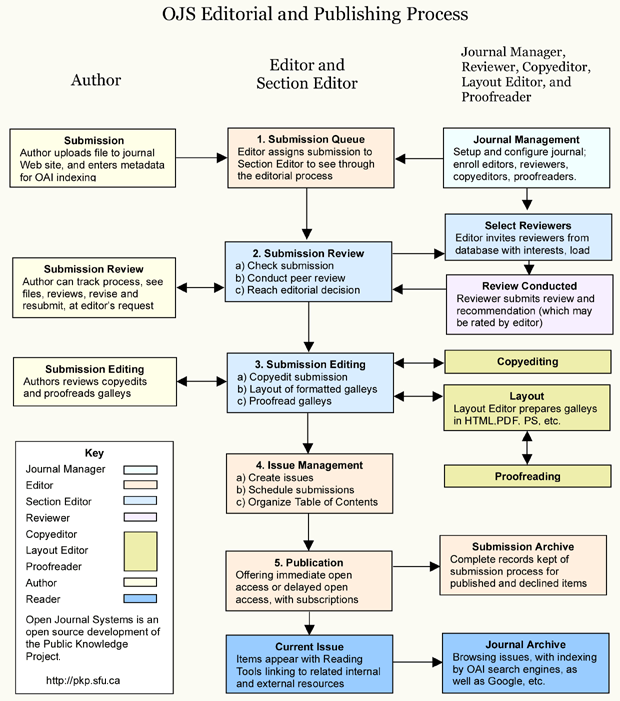
Figure 1. Editorial Process of Persepsi: Communication Journal
Ownership and Management Information
Ownership and Management Information
Persepsi: Communication Journal is published by the Masters Program in Communication Science at the Universitas Muhammadiyah Sumatera Utara (UMSU)
Ownership
The journal is owned by Universitas Muhammadiyah Sumatera Utara (UMSU), a higher education institution in Indonesia. The university provides the institutional framework and academic environment that support the journal's publication activities, scholarly development, and commitment to academic integrity.
Management
Persepsi: Communication Journal is managed through an editorial structure comprising the Editor-in-Chief, managing editors, section editors, editorial board members, and peer reviewers. Each member performs responsibilities according to their respective roles to ensure that manuscript handling, peer review, editorial decisions, and publication activities are conducted professionally and transparently.
The editorial team is responsible for managing submissions, conducting initial editorial assessments, coordinating the double-blind peer-review process, communicating decisions to authors, and overseeing the preparation of accepted manuscripts for publication. Editorial decisions are based on scholarly merit, originality, relevance to the journal's focus and scope, reviewer recommendations, and compliance with publication ethics.
Editorial Independence
The journal maintains editorial independence in the evaluation and selection of manuscripts. Ownership and institutional affiliation do not determine the acceptance or rejection of individual submissions. Editorial decisions are made by the responsible editors based on academic quality, originality, relevance, and ethical standards, without inappropriate influence from the owner, publisher, authors, or other external parties.
Publisher and Institutional Support
Universitas Muhammadiyah Sumatera Utara supports the journal's academic and publication activities through its institutional resources and scholarly environment. The provides the academic context for the journal's development and its contribution to research and scholarship in communication and related disciplines.
Transparency and Accountability
The journal is committed to transparency in its ownership, management, editorial structure, peer-review procedures, and publication policies. Information about the editorial team, focus and scope, author guidelines, peer-review process, publication ethics, and other relevant policies is made available through the journal's official website.
Author Fees
Article Processing Charge (APC) Policy
Persepsi: Communication Journal applies the following author fees:
Article Submission Fee: Free (IDR 0).
Article Processing Fee: Free (IDR 0).
Peer Review Fee: Free (IDR 0).
Editing and Proofreading Fee: Free (IDR 0).
Article Publication Fee: IDR 500,000 (approximately USD 27.66).
The article publication fee is charged only if the manuscript is accepted for publication after completing the journal's editorial and peer-review processes. Authors are not required to pay any submission, processing, or peer-review fees.
Payment of the publication fee does not guarantee acceptance. All manuscripts are evaluated based on the journal's editorial policies, academic quality standards, and peer-review procedures.
Author Guidelines
Author Guidelines
Persepsi: Communication Journal invites authors to submit original scholarly articles in the fields of communication. Authors must carefully read and comply with the following guidelines before submitting a manuscript.
A. General Requirements
Manuscripts submitted to Persepsi: Communication Journal must meet the following requirements:
- Language: Manuscripts should be written in proper and academically appropriate Indonesian. Manuscripts written in English may be considered in accordance with the journal's editorial requirements.
- Length: Manuscripts should be between 10 and 20 pages, including tables, figures, and references. Manuscripts exceeding 20 pages will be evaluated by the editors for their academic relevance, completeness, and suitability for publication.
- Reference management: Authors are required to use reference-management software, such as Zotero, Mendeley, or EndNote, to organize citations and references consistently.
- Citation style: Citations and references must follow the American Psychological Association (APA) 6th Edition style.
- Manuscript identity: The manuscript must begin with the article title, author's full name, institutional affiliation, institutional address, and abstract. The abstract should be written in italics in the manuscript template and contain 150–200 words.
- Abstract language: Manuscripts written in Indonesian must include abstracts in both Indonesian and English. Both abstracts must accurately reflect the content of the article and use grammatically correct language. Manuscripts written in English must include an English abstract and comply with any additional language requirements specified by the editor.
- Originality: Manuscripts must be original scholarly works that have not been published previously and are not simultaneously under consideration by another journal or publication.
- Online submission: Manuscripts must be submitted through the journal's Online Journal System (OJS) at the official journal website: https://jurnal.umsu.ac.id/index.php/intiqad/.
- Article template: Authors must prepare their manuscripts using the official journal article template. The Copyright Transfer Form must be completed and submitted when requested by the journal, including after acceptance where applicable.
- Editorial notification: The journal aims to provide an initial editorial notification within 30 days of manuscript submission. The actual duration may depend on editorial screening, reviewer availability, revisions, and other factors. This timeframe does not guarantee acceptance within 30 days.
Article template:
Download the Persepsi Article Template
Mendeley guidelines:
Download the Mendeley Guidelines
B. Structure of the Manuscript
Research articles should generally be organized into the following sections. Authors should follow the official journal template for detailed formatting and presentation requirements.
1. Title
The title must be concise, informative, and representative of the central topic of the article. It should clearly indicate the subject of the study and, where appropriate, its principal focus or research context. Avoid unnecessary abbreviations and overly general wording.
2. Author Information
Provide the full name of each author, institutional affiliation, institutional address, and the email address of the corresponding author. All authors must have made a legitimate scholarly contribution to the work and must approve the submitted manuscript.
3. Abstract
The abstract must contain 150–200 words and be written in italics in accordance with the journal template. It should summarize the research background or problem, objective, methodology, principal findings, and conclusion. Avoid unnecessary citations, unexplained abbreviations, and information that does not appear in the main article.
For manuscripts written in Indonesian, provide the abstract in both Indonesian and English. Authors are responsible for ensuring that both versions are accurate and consistent.
4. Keywords
Provide relevant keywords that represent the main concepts, subject matter, and focus of the article. Keywords should help readers locate the article through academic search engines and indexing services. Follow the number and formatting requirements specified in the journal template.
5. Introduction
The introduction should provide a structured explanation of the research background, research problem, relevant previous studies, scientific gap, novelty, and research objectives or hypotheses.
The review of previous studies should establish the state of the art and demonstrate how the present article contributes to existing knowledge. Rather than presenting an extensive, separate literature-review section, authors should integrate relevant literature into the introduction to establish the rationale and scientific novelty of the study.
The introduction should conclude with a clear statement of the purpose of the research or the research questions and hypotheses, where applicable.
6. Method
The method section must describe clearly and systematically the methods used to address the research problem. Depending on the research design, this section should explain the research approach, design, setting, participants or data sources, instruments, data-collection procedures, and data-analysis techniques.
Authors must provide sufficient information for readers to understand how the study was conducted and to assess the appropriateness and reliability of the methods. The methods selected must be relevant to the research objectives and supported by appropriate methodological references where necessary.
7. Results
The results section should present the research findings in accordance with the methods described. Findings must be supported by sufficient and relevant data or evidence.
Present the results clearly and logically, using tables, figures, or other appropriate forms of presentation when necessary. Tables and figures must have descriptive titles or captions and must be referred to in the text. Interpretation, comparison with previous studies, and broader scientific implications should primarily be addressed in the Discussion section.
8. Discussion
The discussion should interpret and critically analyze the research findings rather than simply repeat the results or restate numerical data. Authors should explain the meaning and significance of the findings and relate them to the research questions, objectives, or hypotheses.
The discussion should address relevant questions, including:
- What scientific insights or contributions emerge from the findings?
- Why did the observed results or phenomena occur?
- How can patterns, relationships, or differences among variables be explained?
- How do the findings compare with those of previous studies on related topics?
- What are the theoretical, practical, or educational implications of the findings?
Explanations must be supported by appropriate theories, empirical evidence, and relevant scholarly literature. Authors should clearly identify similarities and differences between their findings and previous research and explain the contribution of the present study. The discussion must provide a reasoned response to the research questions or hypotheses stated in the introduction.
9. Conclusion
The conclusion should summarize the principal findings and directly address the research objectives, questions, or hypotheses. It should emphasize the main contribution of the study without repeating the results and discussion verbatim.
Where appropriate, authors may include practical implications, recommendations, study limitations, or suggestions for future research. All conclusions must be supported by the findings presented in the article.
10. Acknowledgments
Acknowledgments are optional. Authors may recognize individuals, institutions, or organizations that contributed to the research but do not meet the criteria for authorship. Relevant financial support or research funding should be disclosed in accordance with the journal's requirements.
11. AI Use Statement
Authors must disclose the use of generative artificial intelligence (AI) or other AI tools when such use goes beyond basic spelling, grammar, or language editing. The statement should identify the tool and explain how it was used. It may be placed before the References section or in the Acknowledgments section, in accordance with the journal's AI Use Policy.
AI tools cannot be listed as authors. Authors remain fully responsible for the originality, accuracy, integrity, analysis, interpretation, citations, and conclusions of the manuscript. AI must not be used to fabricate or falsify data, results, images, or references.
12. References
All sources cited in the text must appear in the References section, and every reference listed must be cited in the manuscript.
Authors must comply with the following requirements:
- Each article must contain at least 15 references.
- At least 80% of the total references should be primary scholarly sources, particularly journal articles, published within the five years preceding submission, subject to the relevance and availability of appropriate literature.
- Authors should prioritize credible, relevant, and recent peer-reviewed journal articles and other authoritative scholarly publications.
- All citations and references must follow APA 6th Edition style consistently.
- Authors are strongly encouraged to use Zotero, Mendeley, EndNote, or another reference-management application.
- DOIs should be provided for cited publications when available.
C. Citation and Reference Style: APA 6th Edition
Persepsi: Communication Journal uses the American Psychological Association (APA) 6th Edition referencing style. The following examples illustrate common reference types. Authors should check punctuation, capitalization, italics, and other details against APA 6th Edition requirements.
1. Journal Article
Format:
Author, A. A., Author, B. B., & Author, C. C. (Year). Title of the article. Title of the Journal, volume(issue), page–page. https://doi.org/xxxxx
Example:
Islam, M. M., Islam, A. Y., Azim, A. Y., Anwar, M. R., & Uddin, M. M. (2014). Customer perceptions in buying decision towards Bangladeshi local apparel products. European Scientific Journal, 10(7), 482–497.
2. Book
Format:
Author, A. A. (Year). Title of the book. Location: Publisher.
Examples:
- Atkinson, R. L. (1996). Introduction to psychology. USA: Harcourt Brace Company.
- Burns, R. B. (1999). Konsep diri: Teori, pengukuran, perkembangan dan perilaku. Jakarta: Penerbit Arcan.
3. Translated Book
Format:
Original Author, A. A. (Year). Title of the translated work (Translator, Trans.). Location: Publisher. (Original work published Year, where applicable.)
Example based on the source information:
Creswell, J. W. (2010). Research design: Pendekatan kualitatif, kuantitatif, dan mixed (A. Fawaid, Trans.). Yogyakarta: Pustaka Pelajar.
Note: Authors should verify the original publication details and the translator's name against the edition actually consulted.
4. Conference Proceedings
Format:
Author, A. A. (Year). Title of paper. In Title of proceedings (volume and issue, if applicable, pp. xx–xx). Publisher or conference organizer.
Example based on the source information:
Fitri, I., Juwono, & Sabar, A. (2012). Zakah perspectives as a symbol of individual and social piety: Developing review of the Meadian symbolic interactionism. Global Conference on Business and Finance Proceedings, 7(1), 721–742.
Note: Complete author names, publication details, dates, and page ranges should be verified against the original proceedings.
5. Patent
Format:
Inventor, A. A. (Year). Title of patent (Patent No. xxxxx). Patent authority.
Example:
Hwang, H. (2010). Generalized structured component analysis with latent interactions (U.S. Patent No. 5,576,109).
6. Institutional or Government Publication
Format:
Institution Name. (Year). Title of report or publication. Location: Publisher.
Examples:
- Badan Pusat Statistik. (2015). Laporan bulanan data sosial ekonomi. Surabaya: BPS Jawa Timur.
- Kementerian Pendidikan dan Kebudayaan Republik Indonesia. (2010). Pendidikan anti korupsi untuk perguruan tinggi. Jakarta: Direktorat Jenderal Pendidikan Tinggi.
7. Law or Regulation
References to legislation and regulations must identify the official title, number, year, and other publication information required by the relevant legal citation conventions. Authors should ensure that the legal reference is accurate and can be verified by readers.
Example based on the source information:
Republik Indonesia. (2003). Undang-Undang Republik Indonesia Nomor 20 Tahun 2003 tentang Sistem Pendidikan Nasional.
D. Ethical Responsibilities of Authors
By submitting a manuscript to IPersepsi: Communication Journal, authors confirm that they have complied with the journal's publication ethics policies and applicable research ethics standards.
- Originality and plagiarism: Authors must acknowledge all sources appropriately and must not plagiarize their own work or the work of others.
- Exclusive submission: A manuscript must not be submitted simultaneously to another journal.
- Research integrity: Data, methods, results, images, and conclusions must be reported accurately. Fabrication and falsification are prohibited.
- Authorship: All listed authors must have made appropriate scholarly contributions, approved the final manuscript, and agreed to submission.
- Conflicts of interest: Authors must disclose relevant financial or non-financial interests that could influence the research or its interpretation.
- Research ethics: Where applicable, authors must obtain the necessary ethical approval, informed consent, permissions, and safeguards for research involving human participants or sensitive data.
- Corrections: Authors must promptly inform the editor if they discover a significant error in a submitted or published article and cooperate in the correction process.
E. Peer Review and Editorial Decisions
All submissions are subject to an initial editorial assessment to determine their relevance to the journal's scope, compliance with the author guidelines, originality, and suitability for peer review. Manuscripts that pass the initial assessment may be sent to reviewers in accordance with the journal's Review Process Policy.
Authors may be asked to revise their manuscripts in response to editorial or reviewer comments. A request for revision does not guarantee acceptance. The final publication decision rests with the editor, taking into account the manuscript's scholarly quality, relevance, ethical compliance, and review outcomes.
F. Submission Checklist
Before submitting a manuscript, authors should ensure that:
- The manuscript fits the focus and scope of Persepsi: Communication Journal
- The manuscript is original and is not under consideration elsewhere.
- The manuscript follows the official article template and meets the 10–20-page guideline, subject to editorial evaluation.
- The title, author details, abstract, and keywords are complete.
- Indonesian-language manuscripts include abstracts in Indonesian and English.
- The article follows the required structure and uses clear, appropriate academic language.
- The manuscript includes at least 15 references and prioritizes recent primary scholarly sources.
- Citations and references are consistent with APA 6th Edition.
- Relevant ethical approvals, permissions, funding disclosures, and conflict-of-interest statements are included where applicable.
- AI use is disclosed when required by the journal's AI Use Policy.
- The manuscript and any required supplementary files are ready for upload through OJS.
Authors are responsible for ensuring that their submissions comply with these guidelines and the journal's other editorial and publication ethics policies. Manuscripts that do not meet the requirements may be returned for technical correction before proceeding to editorial assessment.