
- Focus and Scope
- Section Policies
- Peer Review Process
- Open Access Policy
- Publication Frequency
- Archiving
- Artificial Intelligence (AI)
- Inclusion and Indexing
- Ownership and Management Information
- Conflict of Interest Policy
- Author Fees
- Allegation of Research Misconduct
- Post-Publication Discussion Policy
- Authorship Criteria
- Manuscript Type
Focus and Scope
Objectives and Scope
Objectives
Bahterasia: Jurnal Ilmiah Pendidikan Bahasa dan Sastra Indonesia aims to serve as a scholarly platform for disseminating original research findings, conceptual studies, and critical analyses that contribute to the advancement of knowledge and practice in Indonesian language education, literature, and linguistics. The journal promotes the development of educational theory and practice, encourages innovation in teaching and learning, and facilitates academic dialogue among researchers, lecturers, teachers, practitioners, and other scholars from around the world and within Indonesia.
Specifically, the journal aims to:
- Promote the dissemination of high-quality and original scholarly works in Indonesian language and literature education.
- Advance theoretical and empirical research on Indonesian linguistics and literature, including curriculum development, learning methods, and instructional innovations.
- Encourage innovation in teaching and learning through the integration of information and communication technology and contemporary pedagogical approaches.
- Strengthen the incorporation of local and national literature, character education, and analytical frameworks in language studies.
- Foster academic collaboration and scholarly discussion among researchers, educators, and practitioners in the field of language and literature at national and international levels.
Scope
Bahterasia: Jurnal Ilmiah Pendidikan Bahasa dan Sastra Indonesia welcomes original research articles, conceptual papers, and scholarly reviews that showcase research novelty and significance for the advancement of science. The journal's scope includes, but is not limited to, the following areas:
- Linguistics: phonology, morphology, syntax, discourse analysis, psycholinguistics, sociolinguistics, and critical discourse analysis.
- Literature: studies on local literature, Indonesian literature, foreign literature, children's literature, literature studies for character education, and other literary analyses.
- Indonesian Linguistics and Literature Education: curriculum development, instructional methods, learning materials, educational media, assessment and evaluation, Indonesian language learning across the curriculum, information and communication technology (ICT) in Indonesian language learning, language skills, and other Indonesian language learning analyses.
The journal welcomes contributions employing appropriate qualitative, quantitative, mixed-methods, research and development (R&D), literature review, and other rigorous scholarly approaches.
Submission Information
The editorial board accepts manuscripts submitted exclusively through the online submission system. Authors who wish to publish their research in this journal must ensure that their manuscripts meet the journal's focus, scope, and author guidelines. For more detailed information, please refer to the terms and conditions of Bahterasia: Jurnal Ilmiah Pendidikan Bahasa dan Sastra Indonesia.
Section Policies
Articles
 Open Submissions |
Indexed |
Peer Reviewed |
Peer Review Process
Review Process Policy
Bahterasia: Jurnal Ilmiah Pendidikan Bahasa dan Sastra Indonesia implements a rigorous peer-review process to ensure the quality, originality, relevance, and academic integrity of manuscripts submitted for publication. The journal is committed to conducting the review process fairly, objectively, confidentially, and in accordance with recognized scholarly publishing ethics.
1. Review System
Manuscripts submitted to Bahterasia: Jurnal Ilmiah Pendidikan Bahasa dan Sastra Indonesia will undergo a two-stage review process:
- First Stage (Initial Screening): Every manuscript is initially screened by the editor to ensure that the submission guidelines, format, focus, scope, and technical requirements have been fully met. Manuscripts that pass this initial screening will proceed to the next stage, while those that do not pass will be returned to the authors.
- Second Stage (Peer Review): Every manuscript that passes the initial screening is assigned to two independent reviewers through a blind peer-review process. The reviewers will evaluate the substance of the manuscript, including its research originality, novelty, methodology, and overall contribution to science.
The identities of the reviewers are kept confidential throughout the evaluation. If there is a disagreement or conflicting recommendation between the two initial reviewers, the editor will appoint a third independent reviewer to provide an additional assessment.
2. Review Duration
The entire review process, from submission to the final editorial decision, typically takes 4 to 8 weeks. However, the duration may vary or take longer depending on the responsiveness of the reviewers, the need for additional review cycles, and the complexity of the manuscript.
Manuscripts sent back to Bahterasia: Jurnal Ilmiah Pendidikan Bahasa dan Sastra Indonesia after author revision may be re-evaluated by the reviewers, depending on reviewer availability, editorial discretion, and the extent of the revisions required.
3. Review Criteria
Reviewers assess manuscripts based on their academic substance, quality, and conformity with the journal's guidelines. The primary criteria include:
- Title and Abstract: Alignment between the title, abstract, research objectives, methods, key findings, and conclusions.
- Introduction: Clarity of the research problem, background, research gap, objectives, and significance of the study.
- Literature Review: Relevance, credibility, and currency of the cited literature and reference list.
- Research Methodology: Appropriateness, clarity, and rigor of the research design, data collection, and analysis.
- Results and Discussion: Accuracy of the findings, depth of critical analysis, and relationship with existing theories and previous studies.
- Novelty and Originality: Originality of the research and its significant contribution to the advancement of language, literature, and linguistics education.
- Conclusion: Consistency of the conclusions with the findings, including appropriate implications and recommendations.
- Presentation and Writing: Clarity, structure, coherence, and strict adherence to the journal's author guidelines.
4. Review Process Workflow
- Stage 1: Manuscript Submission
Authors submit their manuscripts through the online submission system, ensuring all required files are uploaded and author identifiers are handled according to the submission policy. - Stage 2: Initial Editorial Screening
The editor evaluates the manuscript's compliance with submission guidelines, focus, scope, and basic technical requirements. Submissions that do not pass are returned to the authors. Submissions that pass are forwarded to the peer-review stage. - Stage 3: Peer Review Evaluation
Two independent reviewers evaluate the manuscript based on the review criteria. In case of conflicting evaluations, a third reviewer is assigned. The reviewers are responsible for providing evaluation results that determine the article's status. - Stage 4: Editorial Decision
Based on the evaluations and recommendations provided by the reviewers, the editor will send the review results back to the author with one of the following official status notes: - Accepted without revision
- Accepted after minor revision
- Accepted after major revision
- Rejected
- Stage 5: Revision and Resubmission
If revisions are required, authors must revise the manuscript accordingly and submit a point-by-point response to the comments. Revised manuscripts may be returned to the reviewers for further assessment before a final publication decision is reached.
5. Reviewer Responsibilities
Reviewers are expected to:
- Evaluate manuscripts objectively, fairly, and confidentially without any personal criticism.
- Provide constructive, clear, and evidence-based comments to help authors improve their work.
- Assess the originality, novelty, methodological soundness, and scientific contribution of the manuscript.
- Disclose any potential conflicts of interest and decline assignments that may compromise their impartiality.
- Complete assessments within the requested timeframe or promptly notify the editorial team if an extension or a replacement reviewer is needed.
- Maintain absolute confidentiality regarding the manuscript's content and refrain from using unpublished data or ideas for personal or professional advantage.
6. Author Responsibilities During Review
Authors are responsible for responding to reviewers' comments professionally and addressing all issues raised by the editorial team.
- Response to Revisions: When revisions are requested (whether minor or major), authors must provide an updated manuscript along with a detailed, point-by-point response explaining how each comment has been addressed. If authors disagree with a reviewer's recommendation, they must provide a clear and respectful academic justification.
- Exclusive Consideration: Authors must not submit the same manuscript to another journal while it remains under consideration by Bahterasia: Jurnal Ilmiah Pendidikan Bahasa dan Sastra Indonesia. Any request to withdraw a manuscript must follow the journal's official withdrawal policy and requires confirmation from the editor before submission elsewhere.
7. Confidentiality and Publication Ethics
All manuscripts, reviewer reports, and editorial communications are treated as strictly confidential. Editors and reviewers must not share manuscript content, data, or review materials with unauthorized parties.
- Misconduct Investigation: Any suspected plagiarism, data fabrication, data falsification, duplicate publication, unethical research practices, or other forms of academic misconduct will be handled in accordance with the journal's publication ethics policies and relevant guidelines from the Committee on Publication Ethics (COPE).
- Editorial Action: The journal reserves the right to reject a manuscript, issue a correction, or take other appropriate actions if serious ethical violations are identified at any stage of the editorial and publishing process.
8. Editorial Process Diagram
The editorial and publishing process of Bahterasia: Jurnal Ilmiah Pendidikan Bahasa dan Sastra Indonesia follows the standard Open Journal Systems (OJS) workflow, which spans five principal stages:
- Submission: The author uploads the file and enters metadata.
- Submission Review: The editor manages the review queue, invites independent reviewers, monitors the blind peer-review evaluation, and reaches an editorial decision based on reviewer consensus (or a third reviewer if needed).
- Submission Editing: The manuscript undergoes copyediting, layout preparation (galleys in PDF/HTML), and final proofreading.
- Issue Management: Accepted and formatted submissions are scheduled and organized into specific journal issues.
- Publication & Archiving: The final articles are published via open access, displayed in the current issue, and indexed in journal archives and public search engines.
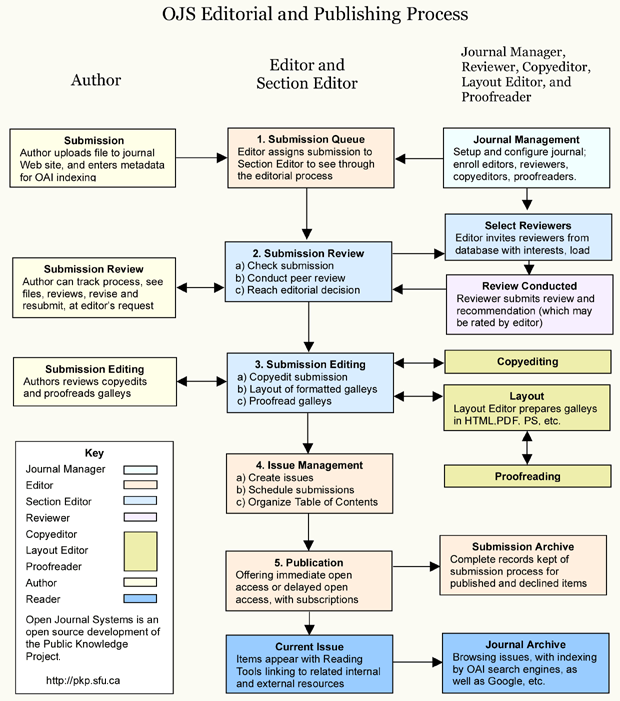
Figure 1. OJS Editorial and Publishing Process of Bahterasia: Jurnal Ilmiah Pendidikan Bahasa dan Sastra Indonesia.
Through this comprehensive process, Bahterasia: Jurnal Ilmiah Pendidikan Bahasa dan Sastra Indonesia seeks to ensure that every published article meets the highest standards of academic quality, originality, research integrity, and relevance to the advancement of language, literature, and linguistics education.
Open Access Policy
Open Access Policy
Bahterasia: Jurnal Ilmiah Pendidikan Bahasa dan Sastra Indonesia provides immediate open access to its published content, based on the principle that making scholarly research freely available to the public supports a greater global exchange of knowledge and contributes to the advancement of education and academic research. The journal is committed to disseminating scholarly work in Indonesian language education, literature, linguistics, and related academic fields without requiring readers to pay subscription fees or access charges.
1. Open Access Statement
All articles published in Bahterasia: Jurnal Ilmiah Pendidikan Bahasa dan Sastra Indonesia are freely available to readers immediately upon publication through the journal's official website. Readers may access, read, and download published articles without registration, subscription, or payment, subject to the applicable copyright and licensing terms.
2. Reader Access and Use
Readers may access the journal's published content without financial or technical barriers imposed by the journal. The use, distribution, reproduction, and adaptation of published articles are governed by the applicable copyright and licensing terms indicated by the journal. Users must provide appropriate attribution to the original authors and source when permitted by the applicable license. Any use beyond the rights granted by that license may require additional permission from the relevant rights holder.
3. Copyright and Licensing
Copyright and licensing arrangements for articles published in Bahterasia: Jurnal Ilmiah Pendidikan Bahasa dan Sastra Indonesia are determined by the journal's official Copyright and Licensing Policy and the license specified for each published article. Authors and readers should consult the relevant article's license statement to determine the permitted conditions for copying, distribution, reuse, or adaptation. This Open Access Policy does not independently grant rights beyond those provided by the applicable license or copyright law.
4. Author Rights
Authors' rights to their published work, including the right to share or deposit their articles in repositories, are governed by the journal's copyright and licensing arrangements. Authors should consult the applicable policy before depositing or distributing published versions of their articles.
5. Publication Fees
Open access to published articles means that readers are not charged to access the journal's content. Any fees payable by authors, including article processing or publication charges, are determined separately and are described in the journal's official Article Processing Charge (APC) Policy.
6. Long-Term Access and Preservation
Bahterasia: Jurnal Ilmiah Pendidikan Bahasa dan Sastra Indonesia aims to maintain the continued accessibility and preservation of its published scholarly content. The journal supports appropriate digital archiving and preservation practices in accordance with its Electronic Archiving Policy and the technical capabilities of its publishing platform.
7. Commitment to Knowledge Dissemination
The journal supports the broad dissemination of academic knowledge and encourages responsible access to scholarly publications. Through its open access model, Bahterasia: Jurnal Ilmiah Pendidikan Bahasa dan Sastra Indonesia seeks to support researchers, educators, students, practitioners, and the wider community in accessing research relevant to Indonesian language education, literature, linguistics, and related academic fields.
Contact Information
For questions regarding open access, copyright, or the use of published articles, please contact the editorial team of Bahterasia: Jurnal Ilmiah Pendidikan Bahasa dan Sastra Indonesia.
- Website: https://jurnal.umsu.ac.id/index.php/BAHTERASIA/
- Email: bahterasia@umsu.ac.id
Publication Frequency
Publication Schedule
Bahterasia: Jurnal Ilmiah Pendidikan Bahasa dan Sastra Indonesia is published twice a year, with two issues released annually in February and August.
The publication schedule is as follows:
Issue | Publication Month |
Issue 1 | February |
Issue 2 | August |
The journal accepts manuscript submissions throughout the year. All submitted manuscripts undergo an initial editorial assessment and peer review in accordance with the journal's editorial policies. Manuscripts accepted for publication are scheduled for inclusion in an issue based on the review results, editorial decisions, and production timeline.
Bahterasia: Jurnal Ilmiah Pendidikan Bahasa dan Sastra Indonesia is committed to maintaining a consistent publication schedule and ensuring the quality, originality, and academic integrity of all published articles.
Archiving
Electronic Archiving Policy
Bahterasia: Jurnal Ilmiah Pendidikan Bahasa dan Sastra Indonesia is committed to ensuring the long-term preservation, security, and accessibility of its published scholarly content. The journal recognizes the importance of digital preservation in maintaining the integrity of the scholarly record and ensuring continued access to published articles.
To support long-term preservation and accessibility, the journal implements the following measures:
- Digital Archiving: All published articles are stored electronically on the journal's official website and maintained within its Open Journal Systems (OJS) platform.
- LOCKSS (Lots of Copies Keep Stuff Safe): This journal utilizes the LOCKSS system to create a distributed archiving system among participating libraries and permits those libraries to create permanent archives of the journal for purposes of preservation and restoration.
- Digital Backup: The journal supports regular backups of published articles, journal metadata, and relevant website content to reduce the risk of data loss caused by technical failures or other unforeseen circumstances.
- Long-Term Preservation: The journal supports digital preservation practices designed to maintain the availability and integrity of published scholarly content over time.
- Open Access and Accessibility: Published articles are made available through the journal's website in accordance with its open-access policy, allowing readers to access scholarly content without unnecessary barriers.
- Persistent Access: The journal seeks to maintain stable access to published articles and their associated metadata. When technical or platform changes occur, reasonable efforts will be made to preserve access to previously published content.
- Repository and Indexing Services: The journal supports the dissemination and preservation of its scholarly publications through appropriate academic repositories, indexing services, and other digital archiving platforms, where applicable.
Through this policy, Bahterasia: Jurnal Ilmiah Pendidikan Bahasa dan Sastra Indonesia aims to safeguard its scholarly publications and support their continued availability to researchers, educators, students, and the wider academic community.
Artificial Intelligence (AI)
AI Disclosure and Ethical Use of Artificial Intelligence Policy
Bahterasia: Jurnal Ilmiah Pendidikan Bahasa dan Sastra Indonesia
Policy Alignment and Scope
Bahterasia: Jurnal Ilmiah Pendidikan Bahasa dan Sastra Indonesia is committed to upholding the highest standards of publication ethics, transparency, and research integrity in accordance with internationally recognized scholarly publishing practices.
This policy governs the responsible use of generative Artificial Intelligence (AI) and AI-assisted technologies across all stages of the publication process, including manuscript preparation, peer review, and editorial decision-making. AI tools must not replace human intellectual contribution, critical thinking, or scholarly judgment. Authors, reviewers, and editors remain fully responsible and accountable for the integrity, accuracy, and originality of all submitted and published work.
1. Principle of Human Accountability
Bahterasia affirms that all scholarly work must be the result of human intellectual effort. The use of AI tools is permitted only as a supportive mechanism and must not substitute for:
- critical analysis,
- methodological rigor,
- scholarly interpretation, or
- academic judgment.
Authors bear full responsibility and accountability for the integrity, validity, and originality of all submitted content, including any portion supported by AI tools.
2. Acceptable Use of AI by Authors
Authors may utilize AI tools under the following conditions:
- to improve language quality, grammar, clarity, and readability;
- to assist with the structural organization of the manuscript;
- to support preliminary idea exploration, provided that all outputs are critically evaluated.
AI tools must not be used to autonomously generate:
- research findings,
- data analysis,
- interpretation of results, or
- scholarly conclusions without substantial human validation.
All AI-assisted content must undergo rigorous human verification to prevent inaccuracies, fabricated citations, or biased outputs.
3. Mandatory AI Disclosure for Transparency
To ensure transparency and reproducibility, IJEMS requires explicit disclosure of AI usage:
- A dedicated “AI Disclosure Statement” must be included in the manuscript prior to the references section.
- The disclosure must include:
- the name and version (if applicable) of the AI tool,
- the specific purpose of use,
- the extent of use, and
- confirmation of full human oversight and responsibility.
Standard format:
“The authors used [AI tool name] solely for [specific purpose, e.g., language editing and structural refinement]. All outputs were critically reviewed, validated, and revised by the authors. The authors take full responsibility for the content of this manuscript.”
Routine spelling and grammar checks do not require disclosure.
If AI tools are employed as part of the research design or methodology, their use must be described in detail in the Methods section to ensure methodological transparency and reproducibility.
4. Data Governance, Privacy, and Intellectual Property
Authors must ensure that the use of AI tools does not compromise:
- the confidentiality of unpublished manuscripts,
- the protection of research data and participant privacy, or
- intellectual property rights.
Authors are required to review the terms of service of AI tools to ensure that no unintended data sharing, storage, or reuse occurs, particularly in relation to sensitive or proprietary materials.
5. AI Use in Visual Materials and Research Outputs
Bahterasia strictly prohibits the use of generative AI for:
- creating, altering, or manipulating figures, images, or graphical representations;
- producing graphical abstracts or other visual research outputs.
An exception is permitted only when AI constitutes an integral component of the research methodology (e.g., AI-based image analysis). In such cases:
- the methodology must be described in a transparent and reproducible manner;
- technical specifications (tool name, version, parameters) must be provided;
- original data may be requested for verification during the review process.
6. Authorship and Contribution Ethics
AI tools do not meet the criteria for authorship and must not be listed as authors or co-authors.
Authorship is limited to individuals who:
- make substantial scholarly contributions,
- participate in drafting or revising the manuscript,
- approve the final version, and
- agree to be accountable for all aspects of the work.
7. AI Use in the Peer Review Process
To maintain the integrity and confidentiality of the peer review process:
- Reviewers are strictly prohibited from uploading manuscripts or any part thereof into AI systems.
- AI tools must not be used to generate, draft, or refine peer review reports.
Peer review requires independent human evaluation, and reviewers remain fully accountable for their assessments.
8. AI Use in Editorial Decision-Making
Editors must not use generative AI tools to:
- evaluate manuscripts,
- formulate editorial decisions, or
- generate decision letters containing confidential information.
Editorial responsibilities require independent expert judgment and must adhere to principles of fairness, confidentiality, and academic integrity.
9. Monitoring, Compliance, and Sanctions
Bahterasia reserves the right to:
- request clarification regarding AI usage,
- conduct ethical checks during submission and review processes, and
- reject manuscripts or retract published articles in cases of policy violations.
Non-compliance with this policy may constitute a breach of publication ethics and will be handled in accordance with established ethical guidelines.
10. Continuous Policy Development
Bahterasia acknowledges the evolving nature of AI technologies and commits to periodically reviewing and updating this policy to maintain alignment with international standards, indexing requirements, and best practices in scholarly publishing.
Inclusion and Indexing
Inclusion and Indexing
Bahterasia: Jurnal Ilmiah Pendidikan Bahasa dan Sastra Indonesia supports the visibility, discoverability, and accessibility of scholarly publications through academic search engines, journal directories, citation databases, and scholarly metadata services. These services help readers, researchers, and academic institutions discover and access the journal's published articles.
The journal's publications and metadata may be discovered through the following platforms and services:
Ownership and Management Information
Ownership and Management Information
Bahterasia: Jurnal Ilmiah Pendidikan Bahasa dan Sastra Indonesia is a scientific journal owned by Universitas Muhammadiyah Sumatera Utara (UMSU) and published through the Indonesian Language Education Study Program, Faculty of Teacher Training and Education, Universitas Muhammadiyah Sumatera Utara, Medan, Indonesia.
The journal serves as an academic platform for disseminating original research articles, conceptual studies, and scholarly discussions in the field of Indonesian language education, literature, and linguistics. It is committed to promoting academic excellence, ethical scholarly communication, and the development of knowledge in language and literature education.
Ownership
The ownership of Bahterasia: Jurnal Ilmiah Pendidikan Bahasa dan Sastra Indonesia rests with Universitas Muhammadiyah Sumatera Utara (UMSU), an institution of higher education in Indonesia. The university provides the institutional framework for the journal's publication and development.
Management
The journal is managed by an editorial team affiliated with the Indonesian Language Education Study Program, Faculty of Teacher Training and Education, Universitas Muhammadiyah Sumatera Utara. The editorial team consists of the Editor-in-Chief, managing editors, editorial board members, and peer reviewers with relevant academic expertise.
The editorial team is responsible for managing manuscript submissions, coordinating the peer-review process, making editorial decisions, maintaining publication quality, and ensuring compliance with the journal's publication ethics and editorial policies.
Editorial Independence
Editorial decisions are made independently based on the scholarly quality, originality, relevance, and contribution of submitted manuscripts to the journal's focus and scope. The journal is committed to maintaining transparency, impartiality, and academic integrity throughout the editorial and publication processes.
For further information, please visit the official website of Universitas Muhammadiyah Sumatera Utara or the journal website at Bahterasia: Jurnal Ilmiah Pendidikan Bahasa dan Sastra Indonesia.Conflict of Interest Policy
Conflict of Interest Policy
Bahterasia: Jurnal Ilmiah Pendidikan Bahasa dan Sastra Indonesia is committed to maintaining transparency, objectivity, and integrity throughout the editorial and peer-review processes. All authors, editors, and reviewers are required to disclose any actual, potential, or perceived conflicts of interest that may influence, or appear to influence, their professional judgment in the preparation, evaluation, and publication of a manuscript.
Authors
Authors must disclose any financial, professional, personal, or institutional relationships that could influence the research, interpretation of findings, or preparation of the manuscript. Such conflicts may include employment, consultancy, financial support, personal relationships, institutional affiliations, or other interests relevant to the submitted work. If no conflict of interest exists, authors should include a statement such as: "The authors declare that there is no conflict of interest regarding the publication of this article."
Editors
Editors must disclose any conflicts of interest related to a submitted manuscript and must not participate in editorial decisions when such conflicts could compromise their impartiality. In these cases, the manuscript will be assigned to another qualified editor who can manage the editorial process objectively.
Reviewers
Reviewers must inform the editorial team of any actual or potential conflicts of interest before accepting or proceeding with a review. Conflicts may include personal relationships with the authors, institutional affiliations, professional competition, collaboration, or financial interests related to the manuscript. Reviewers who cannot provide an objective and impartial assessment must decline the review assignment.
Disclosure and Management
All disclosed conflicts of interest will be assessed by the editorial team and managed appropriately to protect the integrity and fairness of the publication process. Where necessary, the journal may request additional information, appoint an alternative editor or reviewer, or take other appropriate measures. Failure to disclose a relevant conflict of interest may result in editorial action in accordance with the journal's publication ethics policies.
Bahterasia: Jurnal Ilmiah Pendidikan Bahasa dan Sastra Indonesia is committed to ensuring that editorial decisions are based on the scholarly quality, originality, relevance, and academic contribution of the manuscript, free from inappropriate influence arising from conflicts of interest.
Author Fees
Article Processing Charge (APC) Policy
Bahterasia: Jurnal Ilmiah Pendidikan Bahasa dan Sastra Indonesia applies the following author fees to support the journal's editorial and publication processes:
- Article Submission Fee: Free (IDR 0).
- Article Publication Fee: IDR 250,000 (approximately USD 13.90), payable only if the manuscript is accepted for publication.
The publication fee supports editorial administration, manuscript preparation, layout editing, online publication, DOI content registration, and overall journal management. The fee is charged only after the manuscript has been officially accepted for publication.
Payment of the publication fee does not influence the editorial decision or peer-review process. All manuscripts are evaluated based on scholarly quality, originality, relevance to the journal's focus and scope, and compliance with the journal's editorial policies.
Authors will receive official payment instructions from the editorial office after acceptance. Authors should not make payments before receiving official confirmation and payment details from the journal.
For further information regarding publication fees, please contact the editorial office at bahterasia@umsu.ac.id or can contact the journal admin directly at number 08121506088.
Allegation of Research Misconduct
Allegation of Research Misconduct
Bahterasia: Jurnal Ilmiah Pendidikan Bahasa dan Sastra Indonesia is committed to upholding the highest standards of research integrity and publication ethics. The journal takes all allegations of research misconduct seriously, including plagiarism, data fabrication, data falsification, duplicate publication, authorship disputes, inappropriate citation, and other violations of academic and publication ethics.
Reporting Research Misconduct
Authors, reviewers, editors, readers, and other parties may report suspected research misconduct to the editorial team of Bahterasia: Jurnal Ilmiah Pendidikan Bahasa dan Sastra Indonesia. Reports should provide a clear description of the alleged misconduct and, where possible, supporting evidence or relevant documentation.
All allegations will be handled confidentially and fairly. The identity of the person reporting the concern will be protected to the extent possible, subject to the requirements of a fair investigation.
Investigation Procedure
Upon receiving an allegation, the editorial team will:
- Conduct an initial assessment to determine whether the allegation falls within the scope of research or publication misconduct.
- Review the available evidence and, where necessary, request additional information from the parties concerned.
- Contact the relevant author or institution for clarification when appropriate.
- Consult independent experts or the author's affiliated institution if further investigation is required.
- Make a decision based on the available evidence and the principles of fairness, confidentiality, and due process.
The journal will not presume misconduct solely on the basis of an allegation. All cases will be assessed objectively, and the parties involved will be given an appropriate opportunity to respond.
Actions and Sanctions
If research misconduct is confirmed, the editorial team may take one or more of the following actions, depending on the severity of the violation:
- Request corrections or additional clarification from the authors.
- Reject the submitted manuscript.
- Issue a correction or an expression of concern for a published article.
- Retract a published article when warranted.
- Notify the author's affiliated institution or other relevant authorities when appropriate.
- Restrict future submissions from the responsible author or authors in serious cases, where justified by the circumstances.
Post-Publication Allegations
Allegations concerning articles that have already been published will be assessed with the same seriousness as allegations involving manuscripts under review. If new evidence indicates a potential violation, the journal will conduct an appropriate investigation and publish corrections, expressions of concern, or retraction notices when necessary to maintain the integrity of the scholarly record.
Ethical Standards
Bahterasia: Jurnal Ilmiah Pendidikan Bahasa dan Sastra Indonesia follows recognized publication ethics principles and relevant guidelines issued by the Committee on Publication Ethics (COPE). The journal is committed to handling all allegations transparently, consistently, and responsibly while protecting the integrity of scholarly communication.
All parties involved are expected to cooperate with the investigation and provide accurate information relevant to the allegation.
Post-Publication Discussion Policy
Post-Publication Discussion Policy
Bahterasia: Jurnal Ilmiah Pendidikan Bahasa dan Sastra Indonesia encourages scholarly discussion and constructive academic engagement concerning articles published in the journal. The journal recognizes that post-publication discussion contributes to improving scholarly communication, promoting academic integrity, correcting potential errors, and advancing knowledge in Indonesian language education, literature, and linguistics.
1. Opportunities for Post-Publication Discussion
Readers, researchers, authors, and other interested parties are encouraged to submit comments, questions, critical analyses, or additional perspectives concerning articles published in Bahterasia: Jurnal Ilmiah Pendidikan Bahasa dan Sastra Indonesia. Submissions must be academically relevant, evidence-based, respectful, and directly related to the content, methodology, interpretation, or findings of the published article.
2. Submission and Editorial Review
Post-publication comments and discussions may be submitted to the editorial team through the journal's official email address, bahterasia@umsu.ac.id. Submissions should include the title and publication details of the article being discussed, a clear explanation of the issue raised, and supporting evidence or references where appropriate.
The editorial team will assess each submission for academic relevance, factual accuracy, clarity, originality, and compliance with the journal's publication ethics policies. The editor may request revisions or consult the original authors or independent experts when necessary.
3. Publication of Comments and Responses
The journal may publish accepted comments, critical responses, and replies from the original authors in an appropriate format, subject to editorial evaluation. When a comment raises substantive concerns about the validity, methodology, interpretation, or ethical integrity of a published article, the editorial team may invite the original authors to respond.
All published discussions must maintain professional academic standards. Personal attacks, defamatory statements, discriminatory language, and unsupported allegations are not acceptable. The editorial team reserves the right to request revisions or decline submissions that do not meet the journal's academic and ethical requirements.
4. Corrections and Research Integrity
Concerns identified through post-publication discussion will be assessed carefully and fairly. If an issue requires further investigation, the editorial team may contact the authors or relevant institutions, as appropriate. Depending on the nature and seriousness of the issue, the journal may publish a correction, an expression of concern, or a retraction in accordance with its publication ethics policies and relevant scholarly publishing guidance.
The handling of post-publication concerns will aim to protect the integrity of the scholarly record while providing relevant parties with a fair opportunity to clarify or respond to the issues raised.
5. Editorial Independence and Fairness
Decisions regarding post-publication comments and responses are made by the editorial team based on academic merit, supporting evidence, relevance, and ethical considerations. The journal seeks to ensure that all parties are treated fairly and that editorial decisions are not influenced by personal, institutional, or other inappropriate interests.
6. Commitment to Academic Dialogue
Bahterasia: Jurnal Ilmiah Pendidikan Bahasa dan Sastra Indonesia is committed to fostering an open, fair, respectful, and constructive academic environment. The journal welcomes responsible scholarly dialogue that contributes to the development of language and literature education, strengthens research integrity, and supports the continuous improvement of published scholarship.
For post-publication comments, questions, or concerns regarding published articles, please contact the editorial team at bahterasia@umsu.ac.id.
Authorship Criteria
Authorship Criteria
Bahterasia: Jurnal Ilmiah Pendidikan Bahasa dan Sastra Indonesia recognizes authorship as an important academic responsibility that reflects substantial intellectual contributions to the preparation and publication of scholarly work. All individuals listed as authors must have made meaningful contributions to the manuscript and must be accountable for the integrity, accuracy, and originality of the published work.
The journal adopts the following authorship criteria:
- Substantial Contribution: Each author must have made a substantial contribution to the conception or design of the study; the acquisition, analysis, or interpretation of data; or the development of the manuscript's theoretical framework and scholarly arguments.
- Manuscript Preparation and Revision: Each author must have participated in drafting the manuscript or critically revising it for important intellectual content.
- Final Approval: All authors must review and approve the final version of the manuscript before submission or publication.
- Accountability: All authors must agree to be accountable for their respective contributions and cooperate in addressing questions concerning the accuracy, integrity, or ethical conduct of the research.
- Corresponding Author: The corresponding author is responsible for communicating with the editorial office, coordinating communication among co-authors, ensuring that all authors have approved the submitted manuscript, and providing accurate information during the submission and publication process.
- Order of Authors: The order of authors must be agreed upon by all authors before submission and should reflect their respective contributions in accordance with accepted academic practices.
- Changes in Authorship: Any addition, removal, or rearrangement of authors after submission must be justified and approved in writing by all authors concerned, including any author being added or removed. Such changes are subject to the approval of the editorial team.
- Prohibition of Improper Authorship: Gift authorship, guest authorship, ghost authorship, and other forms of misleading attribution are not permitted. Individuals who have not made a qualifying scholarly contribution must not be listed as authors. Contributions that do not meet the authorship criteria may be acknowledged appropriately with the individual's permission.
- Use of Artificial Intelligence: Artificial intelligence tools cannot be listed as authors because they cannot assume responsibility for the accuracy, integrity, and originality of scholarly work. Authors who use AI tools in preparing their manuscripts must remain responsible for the content and disclose such use in accordance with the journal's AI policy.
- Research and Publication Ethics: All authors must ensure that the manuscript is original, has not been published previously, and is not under consideration by another journal. Authors must also comply with applicable research ethics standards, properly acknowledge sources, disclose relevant conflicts of interest, and obtain necessary ethical approvals where applicable.
By submitting a manuscript to Bahterasia: Jurnal Ilmiah Pendidikan Bahasa dan Sastra Indonesia, the corresponding author confirms that all listed authors meet the journal's authorship criteria and have agreed to the submission and its contents.
Manuscript Type
Manuscript Type
Bahterasia: Jurnal Ilmiah Pendidikan Bahasa dan Sastra Indonesia accepts scholarly manuscripts that contribute to the development of knowledge, theory, and practice in Indonesian language education, literature, and linguistics. The journal publishes original and academically rigorous works relevant to its focus and scope.
The journal accepts the following types of manuscripts:
- Original Research Articles: Reports of original empirical research using qualitative, quantitative, or mixed-methods approaches. These articles should present a clear research problem, appropriate methodology, findings, discussion, and conclusions that contribute to the advancement of language, literature, and linguistics education.
- Research and Development Articles: Reports on the design, development, implementation, and evaluation of educational models, learning materials, instructional media, curricula, and other innovations relevant to Indonesian language and literature education.
- Literature Review Articles: Systematic reviews, scoping reviews, and other rigorous literature reviews that critically synthesize existing scholarly publications to identify research trends, knowledge gaps, and directions for future research in linguistics, literature, and language instruction.
- Conceptual Articles: Scholarly papers that develop, analyze, or critically discuss concepts, theories, frameworks, and contemporary issues related to Indonesian language education, literary studies, and linguistic theories.
- Case Study Articles: In-depth investigations of specific cases, practices, classroom innovations, or programs in language and literature education that provide meaningful insights and implications for educational theory, policy, or practice.
- Educational Evaluation Articles: Studies evaluating Indonesian language education programs, curricula, instructional practices, language skill development programs, or educational interventions using appropriate and transparent evaluation methods.
All submitted manuscripts must be original, relevant to the journal's focus and scope, and prepared according to the journal's Author Guidelines. Manuscripts must demonstrate academic rigor, a clear contribution to the field, appropriate use of references, and compliance with research and publication ethics.
The journal does not accept manuscripts that have been published previously or are simultaneously under consideration by another journal. All submissions are subject to an initial editorial assessment and peer review in accordance with the journal's editorial policies. Acceptance for publication depends on the manuscript's quality, relevance, originality, and reviewers' recommendations.
Bahterasia: Scientific Journal of Indonesian Language and Literature Education is abstracting & indexing in the following databases: