2.jpg)
1.png)





- Focus and Scope
- Section Policies
- Peer Review Process
- Open Access Policy
- Archiving
- Publication Ethics
- Submission Guidelines
- Indexing
- References Management
- Retraction and Withdrawal Policy
- Plagiarism Check
- Author Fees
- Artificial Intelligence (AI)
- Repository Policy
- Plagiarism Check
Focus and Scope
Ar-Rasyid: Jurnal Pendidikan Agama Islam is a media publication manuscript that contains the results of the Field Research applying peer-reviewed. Manuscripts published in Ar-Rasyid: Jurnal Pendidikan Agama Islam includes the results of scientific research original articles scientific reviews that are new, Ar-Rasyid: Jurnal Pendidikan Agama Islam accepts manuscripts in the field of research that covers scientific fields:
- Islamic Education
- Islamic education curriculum
- Islamic education management
- Islamic education methods
- Islamic educational institutions
- Islamic education concepts
Section Policies
Articles
 Open Submissions Open Submissions |
Indexed |
Peer Reviewed |
Peer Review Process
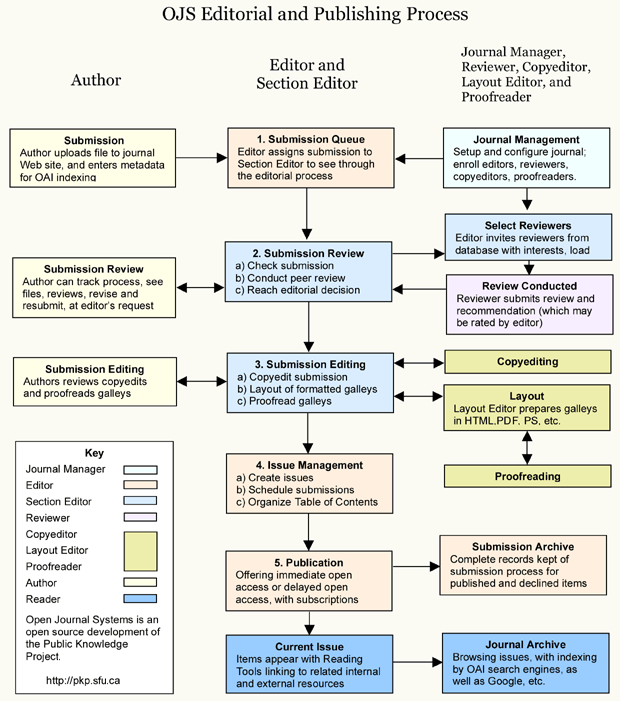
Ar-Rasyid: Jurnal Pendidikan Agama Islam implement each accepted manuscript will go through a review process by the Editor and reviewers, using a Double blind Peer-Review Process, which the reviewer does not know the identity of the author, and the author did not know the identity of the reviewer.
Ar-Rasyid: Jurnal Pendidikan Agama Islam implement policies Double Blind Peer-Review, every manuscript received will be sent to Reviewers who registered in the Ar-Rasyid: Jurnal Pendidikan Agama Islam. The review process lasts a maximum of up to 30 (thirty) days with the allocation of time given to each reviewer to complete its review process is a maximum of ten (10) working days. If the partners designated bestari previously not able to finish his review work within the time limit specified then chairman of the Chairman of Editorial Board will appoint a replacement to do a review Reviewers manuscript.
In the review process, reviewers provide considerations relating to compatibility between the title, abstract, introduction, discussion (results) and conclusion. In addition reviewer also give consideration associated with novelty, scientific impact and references used
Review Process:
- Author submit the manuscript
- Editor Evaluation [some manuscripts are rejected or returned before the review process]
- Double-blind peer review process
- Editor Decision
- Confirmation to the authors
EDITORIAL PROCESS
Open Access Policy
This journal provides immediate open access to its content on the principle that making research freely available to the public supports a greater global exchange of knowledge.
Archiving
This journal utilizes the LOCKSS system to create a distributed archiving system among participating libraries and permits those libraries to create permanent archives of the journal for purposes of preservation and restoration. More...
Publication Ethics
Ar-Rasyid: Jurnal Pendidikan Agama Islam follow the guidelines established by the Committee on Publication Ethics (Committee on Publication Ethics - COPE-) in all matters related to the ethics of publication. Ar-Rasyid: Jurnal Pendidikan Agama Islam adapting to meet the highest standards of ethics intended for editors, writers, and Reviewer. Publisher does not have the right to interfere with the integrity of the paper and is only responsible for publishing regularly and on time.
FOR EDITOR
- Editor Party Must ensure that writers follow the procedures/rules of writing in the Ar-Rasyid: Jurnal Pendidikan Agama Islam.
- The Editor can communicate with the Journal Manager, Editor, and Reviewer other in taking the Final Decision.
- Editors should refuse assignments when there is a possible conflict of interest
- The Editor must provide manuscripts assess objectively without seeing aspects of nationality, ethnicity, political affiliation, ethnicity, race, religion, gender, seniority, or institutional affiliation author.
- Editors should refuse assignments when there is a possible conflict of interes.
- Editors must ensure that the manuscript sent to reviewers do not contain information about the author, and vice versa.
- Decisions editors must be delivered to the author with responses Reviewer, except for responses that are personal or libelous.
- Editors should honor requests from writers who refuse individuals to evaluate manuscripts for reasons unacceptable.
- When the Editor finds or suspects Violation action writing and conflict authorship, editors can follow the guidelines in the flow diagram in resolving conflict COPE authorship.
- Editor and all staff must ensure the confidentiality of all the manuscripts received
FOR REVIEWER
- Reviewers are asked to provide an assessment of the substance of the manuscript in accordance with the Focus and Scope Journal and provide recommendations on assessment.
- Reviewers are asked to provide comments on the manuscript, if it is suspected find procedural mistakes of writing, publishing and publishing ethics
- Mitra Bestari can complete work on at a predetermined time and provide information to the editor if they are unable to meet the time limit specified.
- Reviewers must be able to be confidential manuscripts Author.
- Reviewers should not accept manuscripts for appraisal, if potential conflicts of interest, both individually and collaboratively with any institution.
- Reviewers should ask for consideration to the Editor on the similarity of substance or overlap between the manuscript under consideration or manuscript that was published more in common with Author or other.
- privileged information or ideas obtained through peer review must be kept confidential and not used for personal gain.
FOR AUTHORS
- The author must ensure that the manuscript is original and not plagiarism.
- The author must ensure that the manuscript has not been published previously and have never been assigned the rights to the article to the other party.
- The author ensures that manuscript Send tends to the work itself and follow the standard rules in accordance with the format quoting the appropriate reference.
- The author must ensure that the manuscript is original and does not engage in plagiarism or automatic plagiarism and Self-Plagiarism.
- Authors must follow the procedures established of Ar-Rasyid: Jurnal Pendidikan Agama Islam.
- The author does not send the manuscript together with the same topic and title to another journal.
- Authors should be able to provide information and make research data related details when the editor discovered the alleged doubts or falsification or plagiarism in the manuscripts. If the author finds any errors or inaccuracies that affect the manuscript which has been sent, the writer must promptly notify the Editor to immediately withdraw the manuscript writing and repairing.
- The author is not allowed to withdraw the article being reviewed by the reviewer before being restored by a Reviewer to the Editor.
Submission Guidelines
Submission Guidelines Manuscripts must be submitted via online, with the following steps:
- Online paper submited in the portal E-Journal of Ar-Rasyid: Jurnal Pendidikan agama Islam, link: http://jurnal.umsu.ac.id/index.php/ARRASYID/user/register
- Select Menu REGISTER on the homepage, author registering as a Writer (Checking role as Author) at the address: http://jurnal.umsu.ac.id/index.php/ARRASYID/user/register
- Once Writer login as Author, click on "New Submission". Stages submit an article consists of five stages, namely: (1). Start, (2). Upload Submission, (3). Enter Metadata, (4). Upload Supplementary Files, (5). confirmation
- Start section, select the Journal Section (Full Article), check all the options
- In the Upload Submission, please upload the manuscript file in MS Word (doc) article in this section
- In the Enter Metadata, data enter all Writers and their affiliates, followed by the title and abstract, and indexing keywords.
- Upload Supplementary Files in part, is allowed to upload files data to support or cover letter or another document.
- On the Confirmation, please click "Finish Submission" if all the information is correct. DOWNLOAD SUBMISSION GUIDELINES
Indexing
Ar-Rasyid: Jurnal Pendidikan Agama Islam is abstracting & indexing in the following databases:
- Google Scholar
- SINTA 4
- Portal Garuda
- Moraref
- Dimensions
- Crossref
- DOAJ
References Management
References to other publications must be in American Psychological Association (APA) style and carefully checked for completeness, accuracy and consistency. Use Reference Management by Mendeley, Zetero, EndNote.

Retraction and Withdrawal Policy
Retraction
Ar-Rasyid: Jurnal Pendidikan Agama Islam is committed to maintaining the integrity of the scholarly record. A published article may be retracted if, following a thorough investigation, one or more of the following conditions are identified:
There is clear evidence that the findings are unreliable due to research misconduct, such as data fabrication, data falsification, or image manipulation, or due to honest errors, such as significant miscalculations or experimental errors.
The article has been previously published elsewhere without appropriate citation, permission, or editorial justification, constituting redundant or duplicate publication.
The article contains plagiarism or substantial unattributed content from other published or unpublished works.
The research violates accepted ethical standards, including but not limited to the absence of required ethical approval, lack of informed consent where applicable, or other forms of unethical research conduct.
The publication is found to involve serious authorship disputes, undisclosed conflicts of interest that compromise the validity of the work, or manipulation of the peer-review process.
The retraction process follows the principles and guidelines established by the Committee on Publication Ethics (COPE).
The editorial process for retraction includes the following steps:
Concerns regarding a published article may be raised by readers, reviewers, editors, authors, or other relevant stakeholders.
The Editor-in-Chief conducts a preliminary assessment and, where appropriate, initiates an investigation in accordance with COPE's flowcharts and ethical guidelines.
The corresponding author will be invited to provide an explanation and supporting evidence within a specified timeframe.
The editorial board may consult independent experts or the authors' affiliated institutions when necessary.
Based on the available evidence, the Editor-in-Chief determines whether a correction, an expression of concern, or a retraction is the most appropriate course of action.
If retraction is warranted, a formal retraction notice explaining the reasons for the retraction will be published and linked to the original article.
The original article will remain accessible to preserve the scholarly record but will be clearly marked as Retracted on every page.
Retraction is intended to correct the scholarly literature and maintain its integrity rather than to punish authors.
Withdrawal
A manuscript may be withdrawn by its authors only under certain circumstances and with the approval of the Editor-in-Chief.
Before Peer Review
Authors may request the withdrawal of a manuscript before it is assigned to peer reviewers. The request must be submitted in writing by the corresponding author, stating the reasons for withdrawal. Once the request has been approved by the editor, the manuscript will be removed from the journal's editorial system.
During Peer Review
Authors wishing to withdraw a manuscript that is undergoing peer review must submit a formal written request signed by the corresponding author, stating the reasons for withdrawal.
The editorial office will evaluate the request and notify the author of its decision. Authors are not permitted to submit the same manuscript to another journal until the withdrawal request has been formally approved.
After Acceptance
Withdrawal of an accepted manuscript is permitted only under exceptional circumstances, such as:
The discovery of a major error affecting the validity of the research.
Ethical concerns identified before publication.
Legal or copyright issues.
Other compelling reasons deemed acceptable by the Editor-in-Chief.
Accepted manuscripts have already required substantial editorial, peer-review, and production resources. Therefore, withdrawal after acceptance is strongly discouraged.
After Publication
Once an article has been published, it cannot be withdrawn through the regular manuscript withdrawal procedure. If significant problems are identified after publication, the journal will consider issuing a correction, an expression of concern, or a retraction in accordance with COPE guidelines.
Withdrawal Procedure
Authors requesting withdrawal must:
Submit a formal request signed by the corresponding author.
Clearly explain the reasons for withdrawal.
Obtain written agreement from all co-authors if the manuscript has entered peer review or has been accepted for publication.
The Editor-in-Chief reserves the right to approve or reject withdrawal requests based on the stage of the editorial process and the reasons provided.
Ethical Compliance
Ar-Rasyid: Jurnal Pendidikan Agama Islam adheres to internationally recognized publication ethics standards and follows the principles and recommendations of the Committee on Publication Ethics (COPE) concerning corrections, expressions of concern, and retractions. This policy aims to safeguard the integrity of scholarly publications, ensure transparency in the editorial process, and promote responsible academic publishing practices.
Plagiarism Check
Before entering the review process, all manuscripts submitted to Ar-Rasyid: Jurnal Pendidikan Agama Islam will be screened to ensure that they are free from plagiarism, with a similarity index of less than or equal to 20%. If a manuscript is found to have a similarity index exceeding 20%, it will be immediately rejected without proceeding to the review process.
Author Fees
To improve the quality of articles published in Ar-Rasyid: Jurnal Pendidikan Agama Islam, the journal charges the following Article Publication Fees:
- Indonesian Authors: IDR 400,000 per article
- International Authors: USD 23 per article
Authors may apply for a publication fee waiver. However, all waiver requests are subject to verification and must be submitted before manuscript submission, not after the manuscript has been accepted.
Please note: If authors unilaterally withdraw their manuscript or cancel the publication of an article after paying the publication fee, the fee will not be refunded.
Artificial Intelligence (AI)
AI Disclosure and Ethical Use of Artificial Intelligence Policy
Ar-Rasyid: Jurnal Pendidikan Agama Islam
Policy Alignment and Scope
Ar-Rasyid: Jurnal Pendidikan Agama Islam is committed to upholding the highest standards of publication ethics, transparency, academic integrity, and responsible scholarly publishing. This policy establishes guidelines for the ethical use of generative Artificial Intelligence (AI) and AI-assisted technologies throughout the publication process, including manuscript preparation, peer review, and editorial decision-making.
AI tools may be used to support scholarly activities but must not replace human intellectual contributions, critical thinking, methodological rigor, or academic judgment. Authors, reviewers, and editors remain fully responsible and accountable for the integrity, accuracy, originality, and ethical compliance of their work and decisions.
1. Principle of Human Accountability
Ar-Rasyid affirms that scholarly publications must reflect genuine human intellectual contributions. AI tools may be used only as supportive instruments and must not substitute for:
- Critical analysis and independent scholarly thinking.
- Appropriate research design and methodological rigor.
- Interpretation of research findings and scholarly arguments.
- Academic judgment and responsibility for conclusions.
Authors bear full responsibility for all content submitted for publication, including content generated or assisted by AI tools. The use of AI does not exempt authors from ensuring the accuracy, originality, validity, and ethical integrity of their manuscripts.
2. Acceptable Use of AI by Authors
Authors may use AI tools for the following purposes:
- Improving language quality, grammar, spelling, clarity, and readability.
- Assisting with manuscript organization and structural refinement.
- Supporting preliminary idea exploration and literature-search planning.
- Assisting with translation, provided that the translated content is carefully verified.
- Supporting other appropriate academic tasks, provided that all outputs are critically evaluated and validated by the authors.
AI tools must not be used to generate or manipulate research findings, fabricate data or references, or produce interpretations and conclusions that are accepted without substantial human evaluation and verification.
Authors must independently verify all factual claims, citations, references, data, and other information produced or assisted by AI tools. Any inaccuracies, fabricated references, misleading statements, or biased outputs remain the responsibility of the authors.
3. Mandatory AI Disclosure for Transparency
To promote transparency and accountability, Ar-Rasyid requires authors to disclose the substantive use of generative AI and AI-assisted technologies in preparing their manuscripts.
An “AI Disclosure Statement” must be included in the manuscript before the References section whenever disclosure is required under this policy.
The statement should specify:
- The name of the AI tool and its version, where available.
- The purpose for which the tool was used.
- The extent or nature of its contribution.
- Confirmation that the outputs were reviewed and verified by the authors.
Recommended disclosure format:
“The authors used [AI tool name and version, if available] for [specific purpose, such as language editing, translation, or manuscript organization]. All AI-generated or AI-assisted outputs were critically reviewed, verified, and revised by the authors as necessary. The authors take full responsibility for the accuracy, originality, integrity, and content of this manuscript.”
Routine spelling, grammar, and formatting checks that do not involve substantive generative AI assistance do not require a separate disclosure statement.
When AI tools are used as part of the research design, data collection, data processing, analysis, or research methodology, their use must also be described in the appropriate section of the manuscript, particularly the Methods section. The description should provide sufficient information to support transparency, evaluation, and reproducibility.
4. Data Governance, Privacy, and Intellectual Property
Authors must ensure that the use of AI tools does not compromise:
- The confidentiality of unpublished manuscripts and research materials.
- The privacy and protection of research participants.
- The security of research data and other sensitive information.
- Copyright, licensing requirements, and intellectual property rights.
- Research ethics and applicable institutional regulations.
Authors must review the terms of service and data-handling practices of AI tools before uploading manuscripts, research data, interview transcripts, participant information, or other confidential materials. Particular care must be taken when using third-party AI systems that may store, process, or reuse submitted information.
The use of AI must comply with applicable research ethics requirements, data protection principles, and the journal's publication ethics standards.
5. AI Use in Visual Materials and Research Outputs
Authors must ensure the accuracy, authenticity, and integrity of figures, photographs, illustrations, tables, graphical abstracts, and other visual research materials submitted to Ar-Rasyid.
The use of generative AI to create, alter, or manipulate visual materials intended to represent research evidence, empirical observations, or original research data is not permitted when such use misrepresents the underlying evidence or compromises research integrity.
AI-generated illustrations or other non-evidentiary visual materials may be considered when their use is appropriate to the manuscript, permitted by applicable copyright and licensing requirements, and transparently disclosed where relevant. Such materials must not be presented as authentic photographs, original observations, or actual research results when they are not.
An exception applies when AI-based image generation, processing, or analysis constitutes an integral component of the research methodology. In such cases, authors must:
- Explain the role of AI in the Methods section.
- Identify the AI tool, model, version, and relevant technical parameters where available.
- Describe the procedures used to generate, process, or analyze the visual materials.
- Retain original data and supporting documentation for verification when requested by the editors or reviewers.
Authors remain responsible for ensuring that all visual materials comply with ethical, legal, and scholarly standards.
6. Authorship and Contribution Ethics
AI tools, chatbots, and other AI-assisted technologies cannot be listed as authors or co-authors of manuscripts published in Ar-Rasyid.
Authorship is reserved for human contributors who meet accepted scholarly authorship criteria, including substantial intellectual contributions, participation in drafting or critically revising the manuscript, approval of the final version, and accountability for the integrity of the work.
Authors must ensure that all listed co-authors have made legitimate scholarly contributions and have agreed to the submission and final manuscript.
The use of AI does not establish authorship, transfer accountability, or diminish the responsibility of human authors for the published work.
7. AI Use in the Peer Review Process
To protect confidentiality, independence, and the integrity of peer review, reviewers must not upload unpublished manuscripts, confidential manuscript content, reviewer comments, or editorial correspondence to external AI systems without explicit authorization and appropriate safeguards.
Reviewers must not delegate substantive peer-review judgments to AI tools. AI-generated evaluations, comments, or recommendations must not replace the reviewer's independent expert assessment.
Reviewers are responsible for ensuring that their reports reflect their own critical evaluation of the manuscript, including its originality, methodology, scholarly contribution, ethical compliance, and relevance to the field of Islamic Religious Education.
Reviewers must maintain confidentiality and comply with the journal's reviewer guidelines and applicable publication ethics standards.
8. AI Use in Editorial Decision-Making
Editors must exercise independent professional judgment when assessing manuscripts, selecting reviewers, evaluating peer-review reports, and making editorial decisions.
Generative AI must not replace editorial judgment or serve as the sole basis for decisions concerning acceptance, revision, or rejection.
Editors must not disclose confidential manuscripts, reviewer reports, author information, or editorial correspondence to external AI systems without appropriate authorization and safeguards.
Any permitted AI-assisted administrative or technical activity must preserve confidentiality, impartiality, fairness, and accountability. Final editorial decisions remain the responsibility of the designated human editor.
9. Monitoring, Compliance, and Sanctions
Ar-Rasyid reserves the right to:
- Request clarification or additional information regarding the use of AI in submitted manuscripts.
- Request supporting data, original materials, or documentation when necessary to verify research integrity.
- Conduct appropriate ethical and editorial checks during submission, review, and publication.
- Reject manuscripts that violate this policy or other applicable publication ethics requirements.
- Correct or retract published articles when serious violations are established, in accordance with recognized publication ethics procedures.
Potential violations will be assessed fairly and proportionately, taking into account the nature of the violation, the evidence available, and the applicable ethical standards.
Failure to disclose relevant AI use, fabricated citations or data, inappropriate manipulation of research materials, and breaches of confidentiality may constitute violations of publication ethics.
10. Continuous Policy Development
Ar-Rasyid recognizes that AI technologies and scholarly publishing practices continue to evolve. The journal will periodically review this policy to maintain its relevance to developments in AI, academic integrity, research ethics, and international scholarly publishing standards.
Authors, reviewers, and editors are expected to follow the latest version of this policy and any related ethical guidelines issued by the journal.
Through this policy, Ar-Rasyid seeks to encourage responsible innovation while safeguarding the principles of human accountability, transparency, scholarly rigor, and ethical publication in Islamic Religious Education.
Repository Policy
Authors are allowed to deposit published version of articles in other repositories, such as Research Gate or other repository of the author’s choice without violating the rules of multiple publication provisions.
Plagiarism Check
Before entering the review process, all manuscripts submitted to Ar-Rasyid: Jurnal Pendidikan Agama Islam will be screened to ensure that they are free from plagiarism, with a similarity index of less than or equal to 20%. If a manuscript is found to have a similarity index exceeding 20%, it will be immediately rejected without proceeding to the review process.
Universitas Muhammadiyah Sumatera Utara
Kampus Utama
Jl. Kapten Muchtar Basri No.3, Glugur Darat II,Medan
Sumatera Utara-20238
E-mail: arrasyid@umsu.ac.id

This work is licensed under a Creative Commons Attribution-ShareAlike 4.0 International License.